
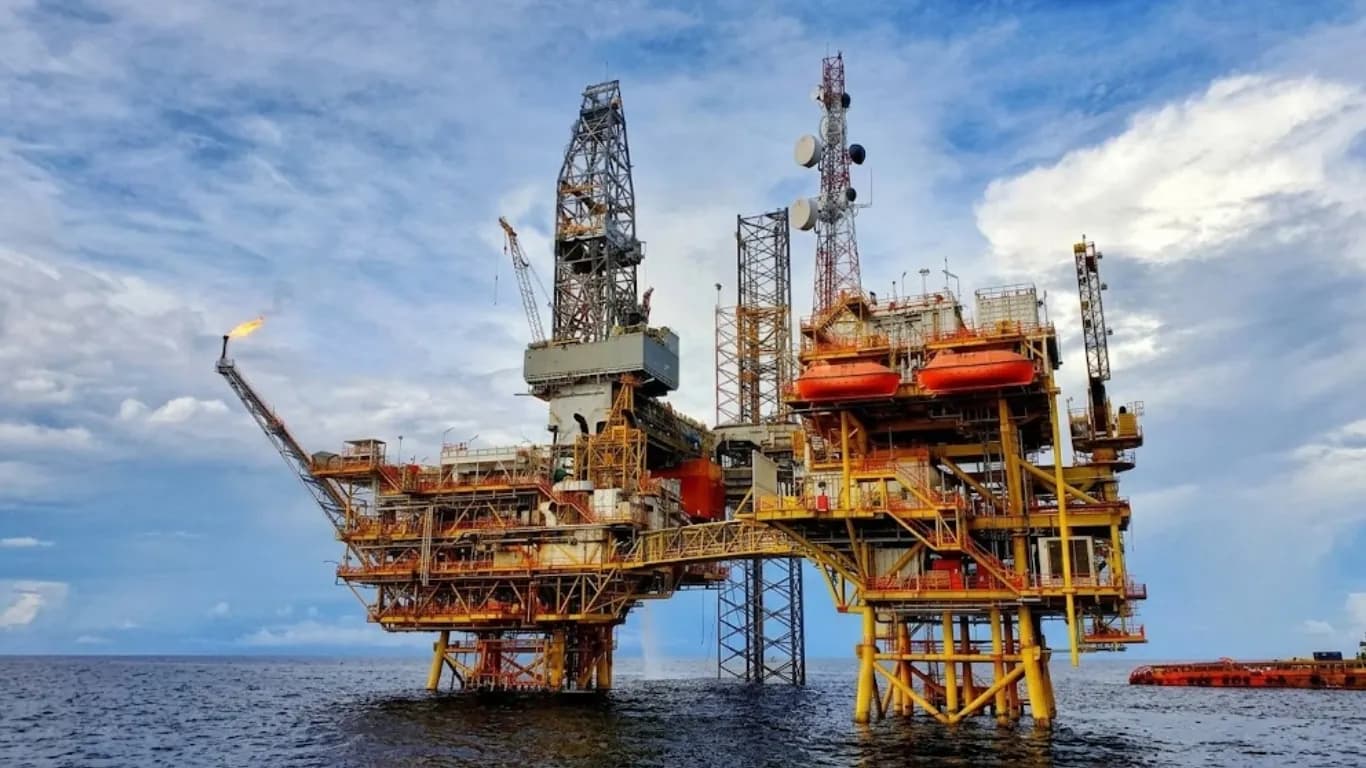
India Didn't Start Going Deep in 2026.
The Seabed Has Been Teaching Us for Decades.
I'm not a geoscientist. Samudra Manthan made me curious: what can India's earlier deepwater campaigns teach us?
So I went back through some of that history.
1970s | THE OFFSHORE FOUNDATION
Bombay High transformed India's offshore story.
But deeper waters demanded something different: technology, expertise, capital , and eventually greater international participation.
1990s–2000s | THE EAST COAST CHANGES THE MAP
NELP opened another chapter, and the Krishna-Godavari Basin became one of India's most important deepwater laboratories.
KG-D6 demonstrated that deepwater discoveries could be developed at scale.
But its subsequent reservoir and production experience also reinforced an important distinction:
Discovery ≠ recoverable reserves ≠ sustained production.
Deepwater geology doesn't always behave exactly as models predict.
DEEN DAYAL | WHEN DISCOVERY MEETS DEVELOPMENT REALITY
GSPC's KG-OSN-2001/3 block produced multiple discoveries and enormous expectations.
But development proved technically and commercially challenging, with substantial investment committed to the block.
An important reminder:
Discovery ≠ economic development.
ANDAMAN | WHEN A WELL DOESN'T BECOME A FIELD
Earlier deepwater drilling encountered gas, but DGH records show reservoirs that were thin and lacked sufficient lateral continuity for commercial interest.
Not useless. It became geological intelligence.
Today, India has returned with vastly more data. Recent ultra-deepwater drilling has provided evidence of an active thermogenic petroleum system — although commercial accumulations remain unconfirmed.
2024 | KG-DWN-98/2
Then came another side of the story.
ONGC commenced first oil from the technically challenging KG-DWN-98/2 deepwater block in January 2024.
Difficult didn't mean impossible.
It meant persistence, better subsurface understanding, technology and execution.
And perhaps that's the real prehistory of Samudra Manthan.
India isn't approaching deepwater with a blank geological notebook.
More wells.
More seismic.
More subsurface data.
Better imaging.
Better technology.
And decades of accumulated experience.
My takeaway from reading this history is simple:
Not every well becomes a discovery.
Not every discovery becomes a development.
Not every development performs exactly as expected.
But each campaign leaves something behind:
Data. Experience. Reduced uncertainty.
So perhaps Samudra Manthan isn't only about how many wells India drills.
But also through how much each well teaches us before the next one is drilled.
Because yesterday's non-commercial well can still become tomorrow's geological intelligence.
Geoscientists, drillers & ONGC veterans , I'd value your perspective:
What lessons from India's earlier offshore campaigns matter most for this next chapter?