
Project Engineering
Rig Modernization
Rig modernization is the structured replacement or re-engineering of ageing electrical, control and safety systems while retaining equipment that remains technically and commercially viable. SMEC can start with one obsolete subsystem or build a wider modernization programme around the rig's next campaign.

Rig Modernisation & Reactivation
Bring the Rig Back—With Its Critical Systems Working Together.
A rig reactivation is a systems-engineering exercise. Drilling power, drives, consoles, machinery, jacking controls and safety-related interfaces must be assessed as connected parts of the operation. SMEC supports electrical restoration, drilling-control integration and equipment modernisation for offshore and onshore drilling assets.
Scope may include SCR/VFD systems, DMS3000, integrated driller consoles, BOP interfaces, jacking/RPD, Gas Watch, PAGA, repair, retrofit and recommissioning.
Explore engineering capabilities
Typical scope
- Installed-base and obsolescence assessment
- SCR/VFD/PLC/HMI replacement
- DMS and drilling-control upgrades
- Jacking/RPD/load monitoring
- BOP, PAGA, Gas Watch and CCTV interfaces
- Power distribution, UPS/DC and panels
- Documentation recovery and staged cutover
Rig Power & Drives
Scope can include SCR/DC drives, VFD/AC drives, Generator PMS and related interfaces. Equipment selection, engineering responsibilities and testing are defined against the project specification.
- SCR/DC drives
- VFD/AC drives
- Generator PMS
- Switchgear
- Harmonic filters
- Distribution skids
- Hybrid SCR modernisation and harmonic mitigation
Drilling Controls
Scope can include DMS3000, Integrated driller consoles, Top drive and related interfaces. Equipment selection, engineering responsibilities and testing are defined against the project specification.
- DMS3000
- Integrated driller consoles
- Top drive
- Mud pumps
- BOP interfaces
Jacking & Handling
Scope can include Jacking and RPD, Gearbox/brake monitoring, Fingerboard and related interfaces. Equipment selection, engineering responsibilities and testing are defined against the project specification.
- Jacking and RPD
- Gearbox/brake monitoring
- Fingerboard
- Pipe handling
- Skidding current
- Fingerboard and pipe-handling equipment
Safety & Monitoring
Scope can include Gas Watch, Mud gas, PAGA and related interfaces. Equipment selection, engineering responsibilities and testing are defined against the project specification.
- Gas Watch
- Mud gas
- PAGA
- Talkback
- ESD/F&G
- Ex CCTV interfaces
Reactivation & Testing
Scope can include Legacy assessment, Drive and control retrofits, FAT and related interfaces. Equipment selection, engineering responsibilities and testing are defined against the project specification.
- Legacy assessment
- Drive and control retrofits
- FAT
- SAT
- Commissioning
Execution sequence
Survey/document review → criticality and obsolescence map → keep/repair/replace decision → engineering → procurement/build → software/configuration → FAT → mobilization → installation → SAT/commissioning.
Applications & Systems
Select a related system to open its dedicated product or system page.
Project Evidence
Drilling Rig — SCR/VFD and Driller Console Modernisation
A drilling asset required coordinated improvements to its power conversion and operator-control systems. The project story examines SCR/VFD interfaces, drilling equipment commands, alarms and recommissioning.
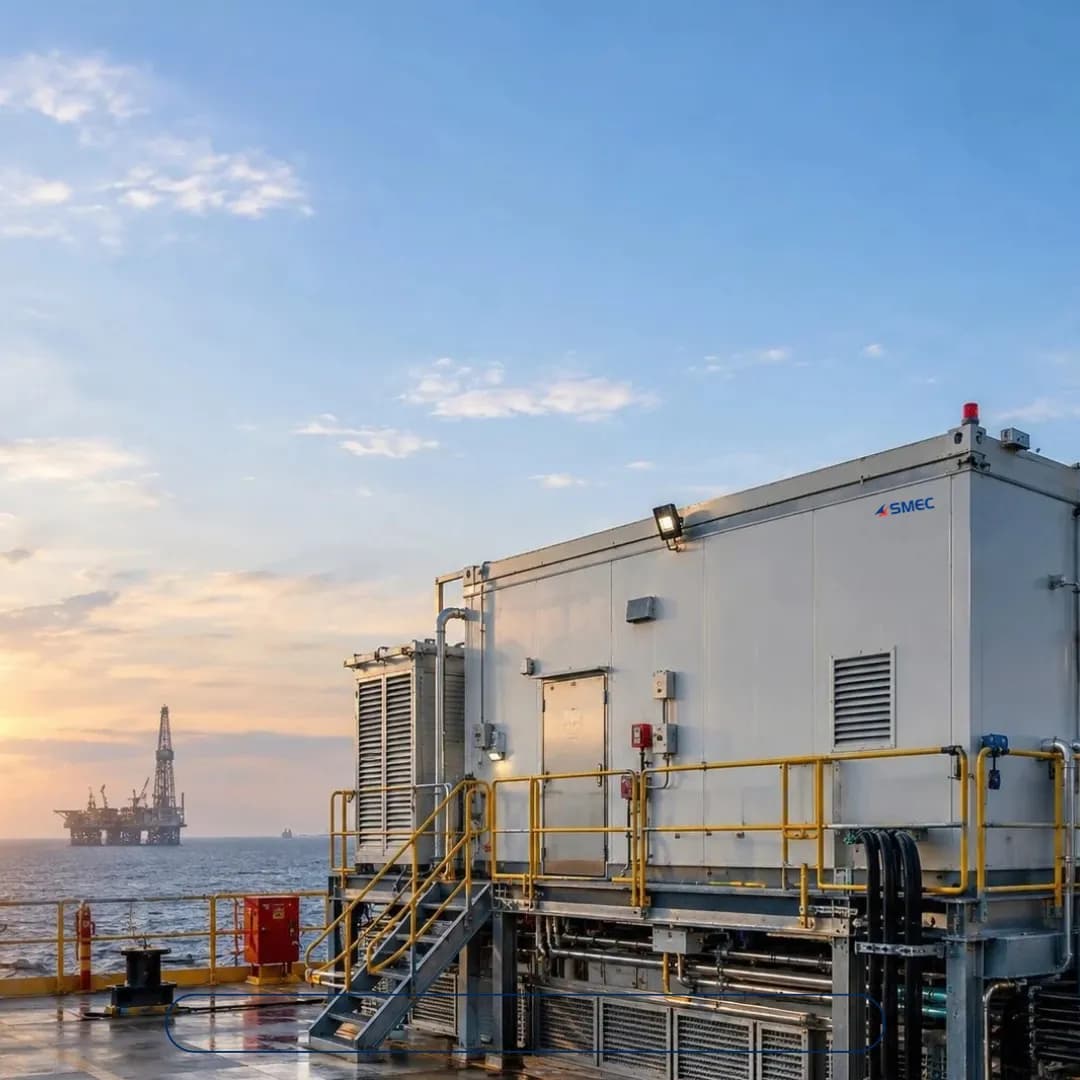
Offshore Drilling Rig — SCR System Inspection and Upgrade
Problem · SMEC scope · Architecture
- Problem
- An ageing SCR system had obsolete modules no longer supported by the OEM, overheating cables, voltage drops, failing relay panels, a mix of control voltages and no local control for the mud pumps. SMEC’s visual, thermal and component inspection, with the onboard technical staff, set out the risks.
- SMEC scope
- SMEC replaced obsolete logic and contactors with a PLC-based control system, fitted new cables and voltage regulation circuits and improved airflow in the SCR compartments, installed a new relay and metering panel, standardised all control circuits to one voltage, and added a dedicated mud pump local panel.
- Architecture
- Seven SCR units: SCR-1 to SCR-4 for draw works and mud pump selection, SCR-5 for mud pump 3 via PLC and VFDs, and SCR-6 and SCR-7 for the top drive.

Jack-up Rig — Retrofit and Synchronization of Six Diesel Generators
Problem · SMEC scope · Architecture · Testing
- Problem
- An obsolete GE DG control system limited synchronization, load sharing and protection across the rig’s six 1050 kW diesel generators.
- SMEC scope
- SMEC retrofitted all six DGs with modern speed control, AVR and synchronization modules, tuned speed, voltage and droop for balanced load sharing, configured auto deloading and protection schemes, and handed over updated drawings, CT/PT settings and program backups.
- Architecture
- Woodward 2301A governors for speed control, EMRI LX20 AVRs for voltage regulation, and a DEIF PPU300 for automatic synchronization, load sharing and protection; 600 VAC at 1200 RPM across all six generators.
- Testing
- Each DG started and calibrated individually; manual synchronization by synchroscope, then automatic synchronization through the PPU300; protections verified. All six DGs ran stably and passed the rig endurance test and jacking operations under real load.
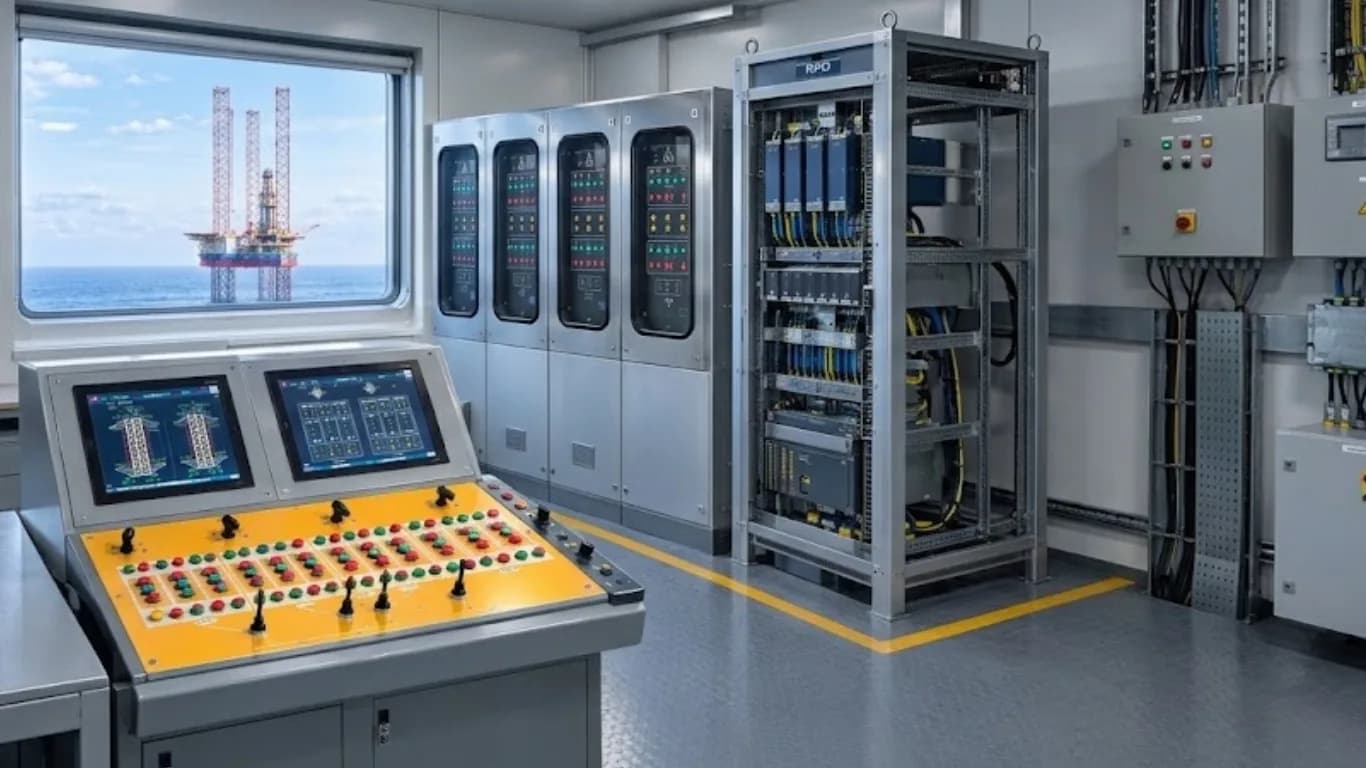
Jack-up Rig — PLC Upgrade for Jacking System Control
Problem · SMEC scope · Architecture
- Problem
- An offshore drilling contractor needed a simple, reliable PLC control system for the hydraulic functions of its four-legged electrohydraulic jack-up system, to improve the efficiency, safety and precision of jacking operations.
- SMEC scope
- SMEC developed the PLC-based jacking control system, integrated the motor control station with an alarm panel and SCR interfacing, installed analogue stroke movement monitors on the hydraulic cylinders and an inclination monitoring and alarm system, and upgraded communication to optic fiber.
- Architecture
- PLC jacking control, motor control station with alarm panel and SCR interface, four analogue stroke movement monitors, inclination monitoring and alarms, and an optic fiber communication link.
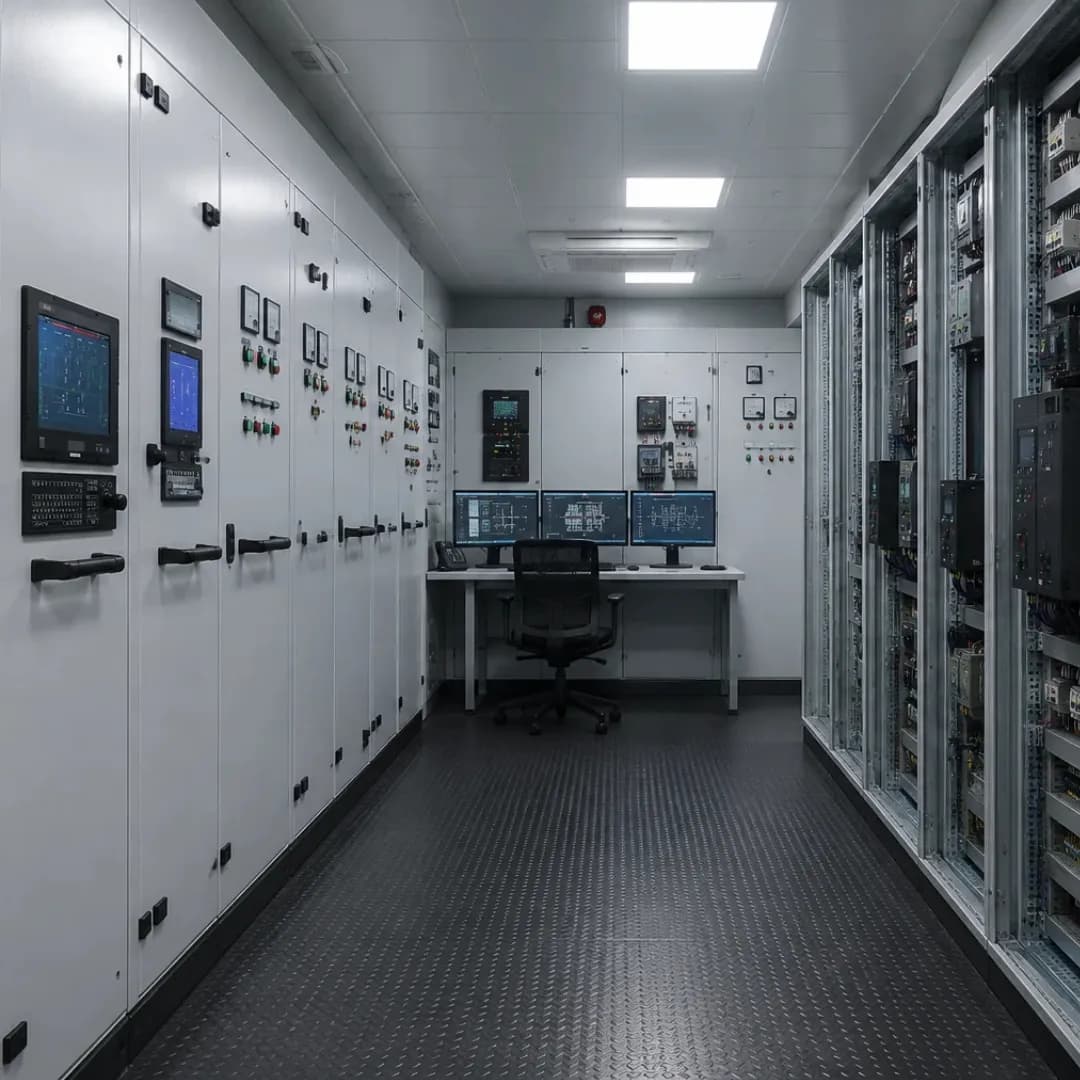
2000 HP Drilling Rig — Full Reactivation of the VFD System
Problem · SMEC scope · Architecture · Testing · Outcome
- Problem
- The rig faced critical downtime with inactive, aged drive systems: a dismantled generator control system with missing ACBs, bus bars, PTs, CTs and AVRs, damaged panels and wiring, crane-damaged enclosures, missing static converters and harmonic filters, and a water-damaged BOP control panel.
- SMEC scope
- SMEC restored and reactivated the VFD system with the VFD house, driller’s console, TDS house, MCC and BCU: replaced ACBs, AVRs, PTs and CTs, serviced reusable Woodward controllers, built new copper bus bars, rewired and reconditioned the panels, rebuilt the enclosures, installed ABB VFDs and filters, and supplied a new PLC-based BOP control system. Engineering and as-fitted drawings were delivered.
- Architecture
- Three VFDs for generator, draw works and rotary; PLC ladder logic and Woodward governor PID loops reconfigured and VFD parameters synced with generator load sharing; PLC monitoring of power factor and phase imbalance; BOP logic linked to remote monitoring over redundant fiber optics, with full diagnostics from the driller’s console.
- Testing
- Insulation resistance, continuity checks and load calculations on the rewired panels; interlocks simulated before live testing. The system passed FAT.
- Outcome
- System uptime from offline to 100% operational; remote command response under 1.5 sec; power load management stable with auto sync; fully energized within the drydock schedule.
Engineering Approach — A rig is an interconnected operating system
Rig reactivation begins with the condition and compatibility of drilling power, drives, consoles, machinery controls, safety interfaces and communications. Repairing one drive or replacing one PLC does not resolve faults caused by missing interlocks, incompatible commands or unreliable power distribution.
An engineering review can identify what is reusable, what requires refurbishment and which systems need modernisation. Integrated testing then checks drilling-machine commands, alarms, protective responses and equipment interfaces before the rig returns to operation under its approved procedures.
Common questions
Can the existing field wiring and I/O be retained?
That depends on survey findings, I/O condition, compatibility, safety requirements and the cutover strategy. Retention should be an engineering decision, not an assumption.
Can modernization be phased around operations?
Where the architecture permits, migration can be planned in stages around shutdown, turnaround or campaign constraints. The final method depends on interfaces and operational risk.
What should be provided for assessment?
Share the existing control architecture, hardware/software versions, I/O count, drawings, backups where available, known faults, obsolescence concerns and the available shutdown window.
Can a rig be modernised in stages?
Potentially. Drives, control systems, monitoring and other packages can be assessed individually, with interdependencies and operating constraints addressed.
Does the scope include SCR/VFD and drilling controls?
Relevant systems include drilling power and drives, consoles, DMS, BOP interfaces, jacking/RPD, gas monitoring and PAGA.
What is needed for an initial rig assessment?
Rig specification, equipment register, OEM/model list, electrical drawings, control architecture, condition reports and reactivation schedule.
Have a Rig Modernization project to discuss?
Share the existing equipment, drawings, project location and scope of work.
Send the rig equipment list, existing OEMs, drawings and target campaign date. Recommended RFQ inputs: project/asset, existing OEM/model, scope, drawings or specification, required date, site location, and any shutdown/mobilization constraint.
AE · Middle East & International
SMEC Oil & Gas Solutions LLC
Abu Dhabi, UAE
IN · India
SMEC Automation Pvt Ltd
Kochi, Kerala, India