
Electrical & Automation
System Integration
System integration is the engineering work between packages: signal ownership, communications, interlocks, time synchronization, alarms, data exchange, power/control interfaces and commissioning responsibility. SMEC defines and tests these interfaces so individual systems operate as one asset architecture.
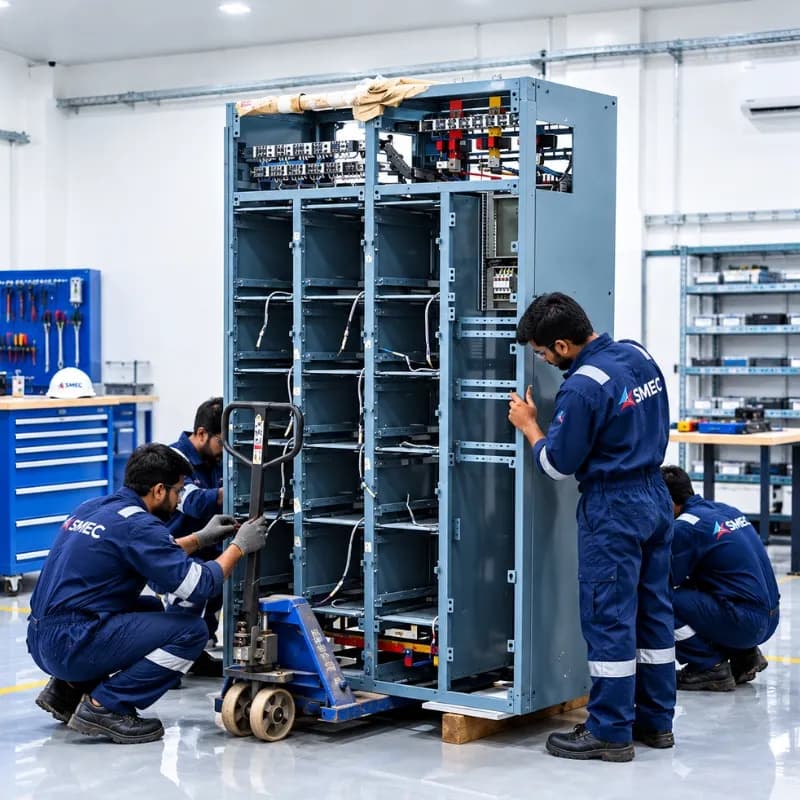
System Integration
Different OEMs. One Connected Operation.
A plant can contain several generations of controllers, power equipment, instruments and OEM packages. The challenge is making the systems exchange the right information without losing control, alarm visibility or interface accountability. SMEC addresses these boundaries through industrial communication, control integration, power-system interfaces and operational data connectivity.
Projects can involve PLC/DCS/SCADA, generator PMS, ESD/F&G interfaces, RTUs, metering, marine IAS and connected asset-monitoring platforms.
Explore engineering capabilities
Interface scope
- I/O and signal interface matrix
- Protocol and network mapping
- PLC/SCADA/package integration
- Drive and MCC interfaces
- ESD/permissive interfaces
- Digital/CMMS/historian connectivity
- Integrated FAT and SAT
Control Systems
Connect controllers, OEM packages and operator stations with defined commands, interlocks and responsibility boundaries.
- PLC-to-PLC
- PLC/SCADA/DCS connectivity
- OEM package integration
- Command, alarm and interlock exchange
Power Systems
Integrate generator PMS, switchgear, MCC/PCC, drives, metering and electrical protection into coordinated operations.
- Generator PMS
- Synchronisation
- Switchgear and MCC
- VFDs
- Protection relays
- Metering and UPS interfaces
- Energy metering and remote power monitoring
Field & Safety
Connect process instruments, package alarms and safety-system interfaces without obscuring independent safety functions.
- ESD and F&G
- Tank gauging
- Gas detection
- RTUs
- Remote I/O
- PAGA
Communications
Design reliable data exchange across industrial protocols, gateways and segregated OT networks.
- Modbus RTU/TCP
- OPC UA
- Serial and Ethernet gateways
- Historians
- OT segmentation considerations
Digital Integration
Convert available plant signals into operational dashboards, historian data and maintenance intelligence.
- NexWave
- ProSet360
- NexVerse
- Energy dashboards
- Edge telemetry
- Marine IAS/PMS
Applications & Systems
Select a related system to open its dedicated product or system page.
Project Evidence
Multi-OEM Package Integration — Centralised Controls and Alarms
Equipment supplied by different vendors required a coordinated control and monitoring interface. The project story focuses on PLC communications, package interlocks, alarms, operator displays and integration testing.

Offshore Drilling Rig — Real-Time Remote Monitoring of Drilling Instrument Parameters
Problem · SMEC scope · Architecture
- Problem
- An offshore oil and gas operator needed secure, real-time access to critical drilling instrument parameters from remote offices, without modifying the existing control systems.
- SMEC scope
- SMEC designed and deployed a real-time remote monitoring system on its own Edge IoT unit, reading data already available in the existing Drilling Management System (DMS) PLC — no additional instrumentation — and publishing it to an authenticated cloud application.
- Architecture
- Ethernet handshake between the DMS PLC and the SMEC Edge IoT unit over CAT 6 cabling and industrial-grade switches; data pushed to AWS Cloud at user-configurable intervals, with up to 4 concurrent authenticated users per location and error alerts on remote PCs if the internet link fails.
Engineering Approach — Resolving interfaces before they become site problems
The critical deliverable in a multi-OEM project is an agreed interface definition. SMEC can review which controller owns each command, how status and alarms are transmitted, which signals are hardwired, and how loss of communications should be handled.
An interface register, signal mapping, network architecture and integrated test procedure bring discipline to that process. Where useful, plant data can also be made available to historians, remote monitoring or maintenance applications without confusing monitoring functions with primary equipment control.
Common questions
Can existing PLCs, generator controls and metering systems feed one SCADA?
The feasibility depends on available signals, protocols, OEM interfaces and required control and alarm functions.
Does integration require replacing existing OEM systems?
Not necessarily. The first step is to identify usable interfaces, missing data, protocol gateways and any lifecycle limitations.
Can remote monitoring be added?
Where communications and data access permit, selected signals can be integrated with an edge or remote-monitoring architecture.
Have a System Integration project to discuss?
Share the existing equipment, drawings, project location and scope of work.
Send the vendor list, interface matrix and control/network architecture. Recommended RFQ inputs: project/asset, existing OEM/model, scope, drawings or specification, required date, site location, and any shutdown/mobilization constraint.
AE · Middle East & International
SMEC Oil & Gas Solutions LLC
Abu Dhabi, UAE
IN · India
SMEC Automation Pvt Ltd
Kochi, Kerala, India