
Electrical & Automation
Electrical Engineering
SMEC supports electrical engineering from load and distribution studies through panels, drives, UPS/DC, modular E-Houses, integration, FAT and site commissioning. Scope is engineered to project voltage levels, fault duties, hazardous-area requirements and client standards.
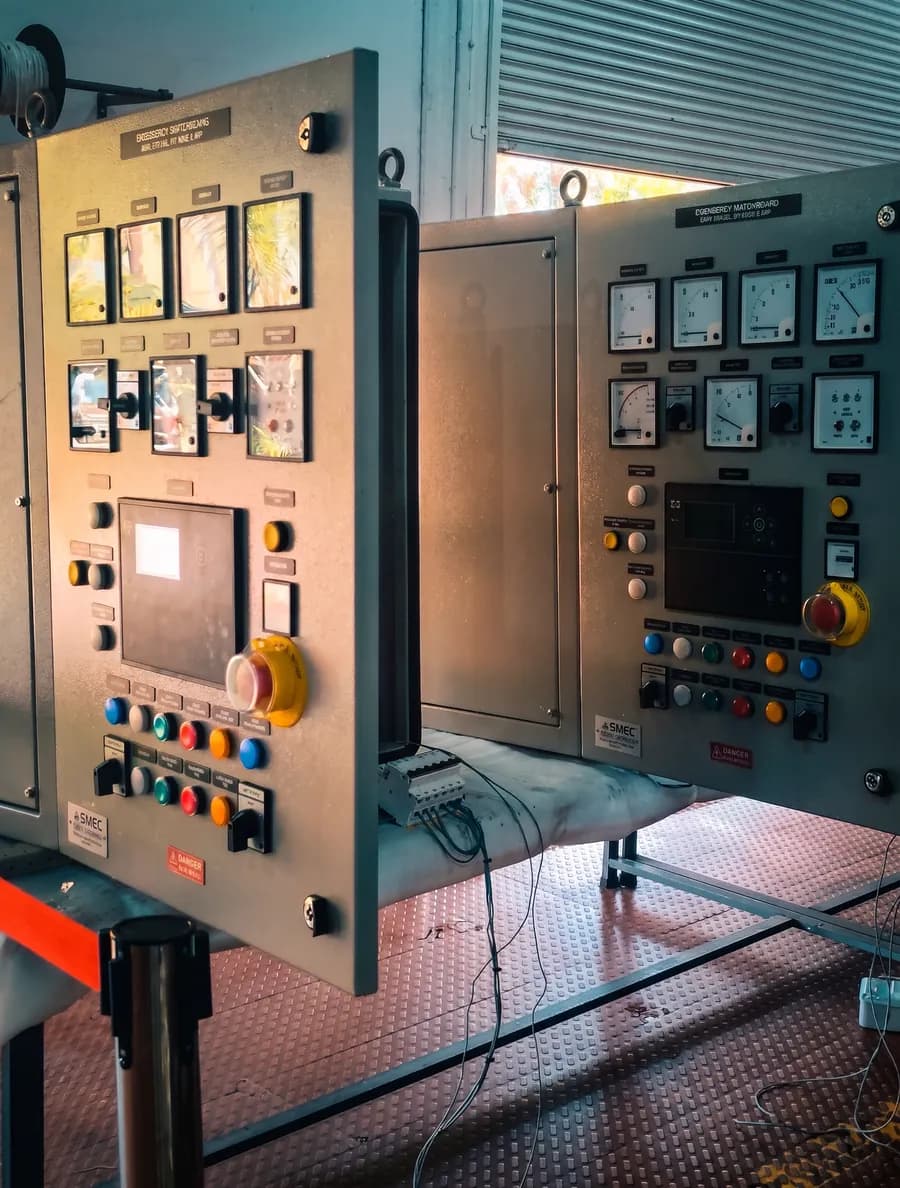
Electrical & Instrumentation Engineering
Power and Instrumentation That Work Together—From Field to Control Room.
In an operating energy facility, power distribution, process measurement and protection cannot be engineered in isolation. A feeder modification affects motor control. A field transmitter feeds process decisions. A gas detector must reach the correct alarm and safety interface. SMEC brings these electrical and instrumentation interfaces into a coordinated engineering scope for oil and gas, offshore, marine and industrial installations.
From new E&I packages and hazardous-area instrumentation to inspection, calibration, refurbishment, retrofit and commissioning, the scope is defined around the asset, site conditions and approved project requirements.
Explore engineering capabilities
Technical scope
- Load lists and SLD development
- MCC/PCC/starter/distribution panels
- VFD/soft-starter systems
- UPS, battery chargers and DC distribution
- E-Houses and modular electrical rooms
- Protection, metering and PMS/ECMS interfaces
- Cable/interface schedules and site integration
Power Distribution & Quality
Engineer electrical distribution and power quality as one connected package, from protection coordination to motor loads and plant metering.
- MV/LV switchgear
- Transformers
- MCC/PCC and distribution
- Protection relays and earthing
- Energy metering
- APFC and harmonic filters
- Generator controls and synchronisation
- Electrical power skids and harmonic mitigation
Motors & Critical Power
Coordinate motors, drives, standby generation and critical DC power with operating and protection requirements.
- VFD and soft starters
- Motor protection
- Generator PMS
- Synchronisation and load shedding
- UPS and battery chargers
- DC systems
Safety & Marine E&I
Connect safety-related signals and specialist marine electrical systems with the wider control architecture.
- ESD and F&G interfaces
- Flare ignition
- PAGA
- Boiler and burner controls
- Marine navigation lights
- Alarm monitoring
Applications & Systems
Select a related system to open its dedicated product or system page.
Project Evidence
Oil & Gas Facility — E&I Distribution and Instrumentation Upgrade
An operating facility required coordinated electrical distribution and field-instrumentation upgrades. The project story focuses on the integration of MCC feeders, instrument signals, protective devices and field testing into an operationally controlled upgrade.
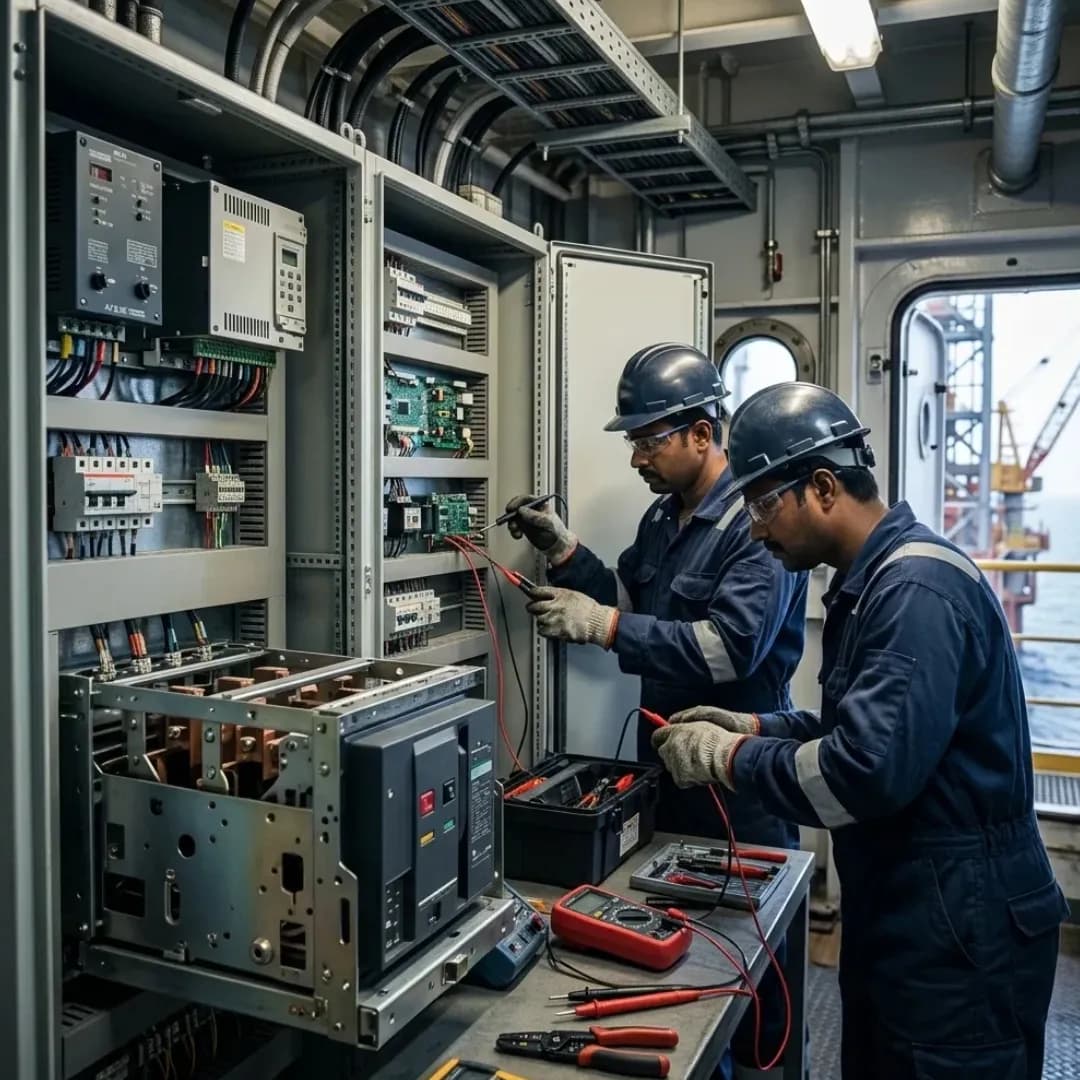
Offshore Drilling Rigs — In-Situ Repair of AC and DC Modules, PCBs and ACBs
Problem · SMEC scope · Testing · Outcome
- Problem
- Under a rate contract, the operator needed a partner to diagnose and repair complex PCB systems across critical rig zones — driller’s console, engine room and control room — on non-standard legacy hardware degraded by salt-laden air, including failing surge suppression and power limit PCBs that affected generator safety.
- SMEC scope
- SMEC deployed a marine electronics team for in-situ and workshop repair of AC and DC modules, PCBs, heat sink–IGBT assemblies and air circuit breakers: reverse engineering of damaged PCBs on proprietary test jigs, hot-swap module servicing to keep rigs running, remote support to rig crews, and tracked logistics from the helibase to SMEC’s facility and back.
- Testing
- Functional simulation of generator exciter and auxiliary motor control PCBs before reinstallation; onboard functional testing with portable test benches and calibrated instruments; electro-thermal profiling of heat sinks; testing and calibration of 460V/600V AC ACBs. Every job documented with test logs and compliance records.
- Outcome
- PCB turnaround cut from 10–12 days to 72–96 hours; equipment downtime from 18+ hours to under 6 hours on average; ACB fault recurrence from 2x a month to 0 over 90 days+; field module failure below 1% after service, with 100% component functionality restored.
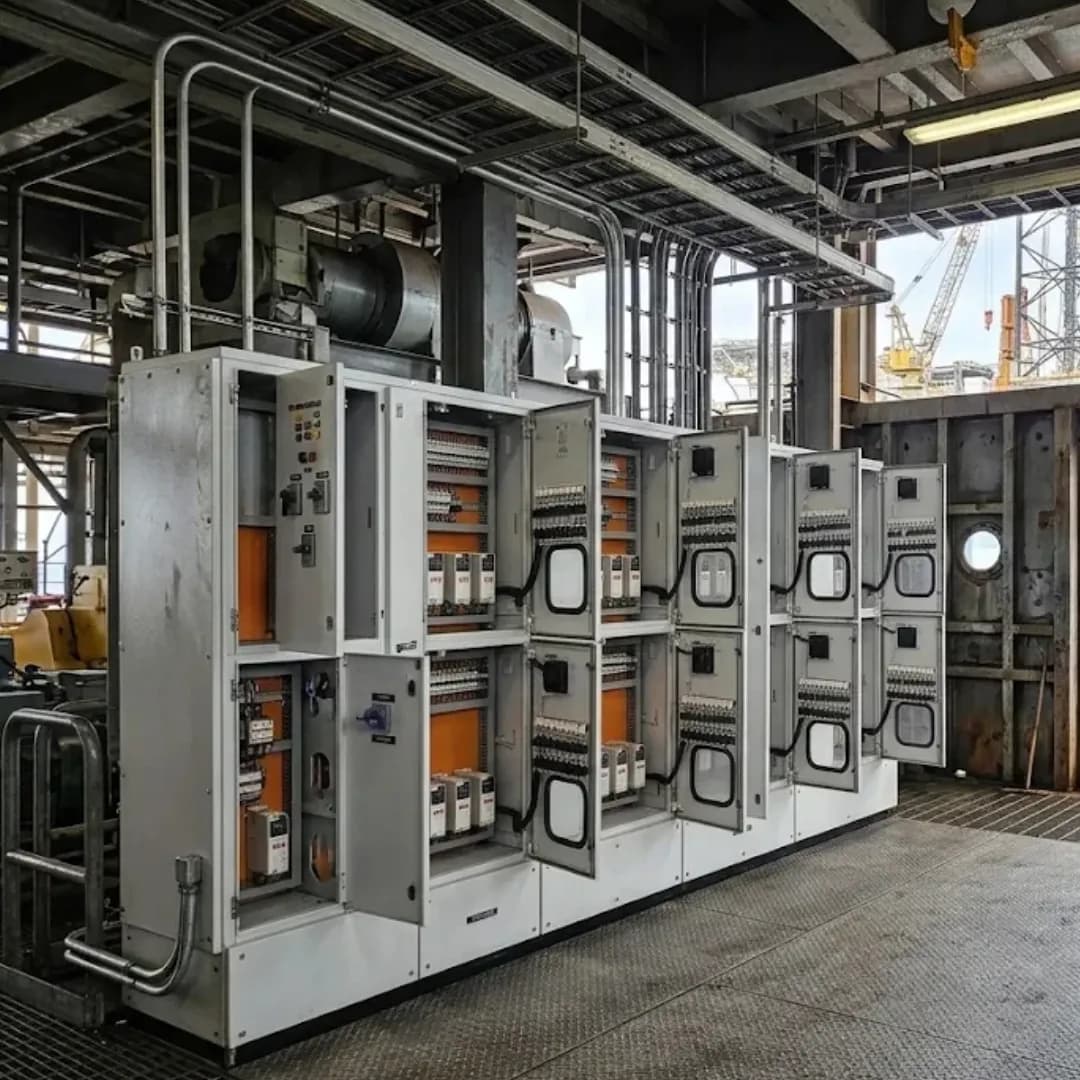
Offshore Rig — Emergency MCC, Transformer and DG Switchboard Upgrade
Problem · SMEC scope · Architecture · Testing
- Problem
- The rig’s emergency power system needed upgrading to improve reliability, efficiency and safety in emergencies, minimise downtime and make maintenance easier.
- SMEC scope
- SMEC designed, manufactured, supplied, installed and commissioned a DG switchboard panel in the MSB room, a DG power isolation panel near the generator, a new transformer and a new Emergency Motor Control Centre, and supplied, installed and commissioned a new emergency generator excitation unit.
- Architecture
- Main switchboard extended with 100x8mm copper bus bars, 4-run per phase, and an additional generator section; 1250 kVA, 600/480 V delta-star dry-type transformer with Class H insulation; modular EMCC with compact bus bars in a prefabricated enclosure for a constrained space; arc-fault detection relays on the isolation panel; Basler excitation unit for the 1625 kVA, 1300 kW emergency alternator.
- Testing
- Load flow analysis for the switchboard extension; harmonic analysis and insulation testing on the transformer; real-time voltage regulation testing and excitation tuning on the generator. Every item installed and commissioned, and confirmed working by rig staff.
Engineering Approach — Engineering a connected E&I package
The starting point is an interface-led review of load lists, single-line diagrams, instrument indexes, P&IDs and the plant control philosophy. Electrical distribution, field measurements and protection are checked together so equipment ratings, signals, trip functions and operating responsibilities are consistent.
For a new installation, the deliverables may extend from drawings and panel integration to instrument loops and coordinated factory testing. For an operating asset, the emphasis shifts to survey findings, reusable infrastructure, access restrictions, shutdown windows and staged commissioning. A successful package is defined by its verified interfaces, not simply the quantity of equipment supplied.
Common questions
Can one project combine power distribution and field instrumentation?
Yes. An integrated scope can coordinate feeders, MCC/VFD interfaces, instruments, loop drawings, metering and alarms, with responsibility boundaries defined in the project specification.
What should accompany an E&I RFQ?
SLD, load list, P&ID, instrument index, BOQ, hazardous-area classification and applicable site standards where available.
Have an Electrical Engineering project to discuss?
Share the existing equipment, drawings, project location and scope of work.
Send the SLD, load list, voltage levels, fault level and project specification. Recommended RFQ inputs: project/asset, existing OEM/model, scope, drawings or specification, required date, site location, and any shutdown/mobilization constraint.
AE · Middle East & International
SMEC Oil & Gas Solutions LLC
Abu Dhabi, UAE
IN · India
SMEC Automation Pvt Ltd
Kochi, Kerala, India