
Product system
Fire & Gas Detection System Integration
From Detection to Response. Every Interface Matters.
SMEC provides Fire & Gas (F&G) detection system integration, control-panel engineering, detector interfacing and retrofit solutions for oil & gas facilities, refineries, offshore installations, terminals and industrial plants.
Our engineering scope covers combustible and toxic gas detector interfaces, flame, smoke and heat detection, F&G control panels, alarm annunciation and approved integration with Emergency Shutdown (ESD), Integrated Control and Safety Systems (ICSS) and Public Address and General Alarm (PAGA) systems.
From new installations to legacy F&G system modernisation, SMEC supports project-specific electrical, instrumentation and automation requirements within the approved safety architecture.
- F&G Integration
- Gas & Flame Detection Interfaces
- F&G Panel Upgrades
- ESD/ICSS Integration
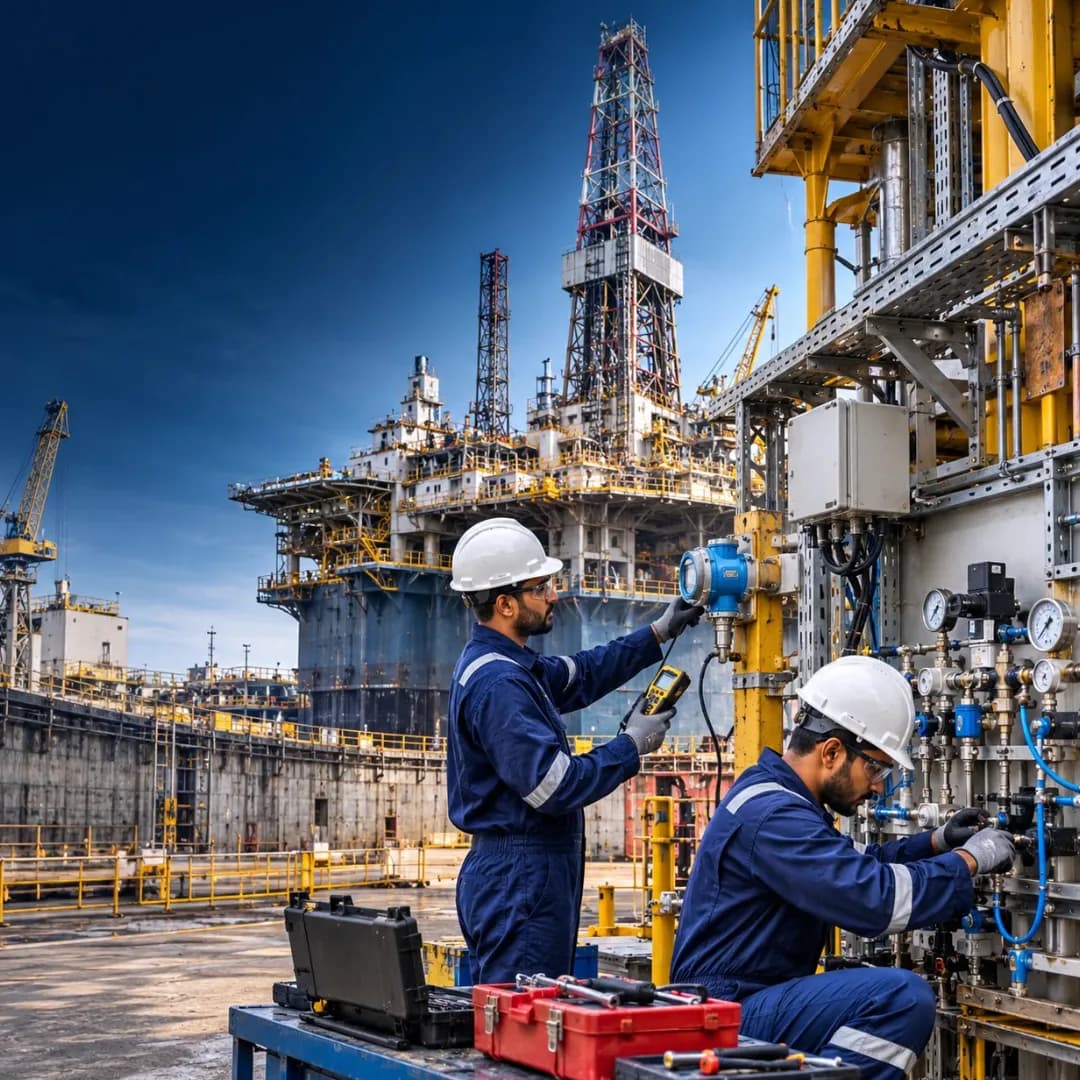
Fire & Gas Detection Designed Around Coverage and Response
Detect the Hazard. Verify the Signal. Execute the Approved Response.
Fire and gas detection systems monitor defined hazards and initiate alarms or protective actions according to the facility's approved F&G philosophy and cause-and-effect requirements.
SMEC supports the engineering and integration of field detectors, monitoring panels, alarm interfaces and communication systems.
The scope is developed around detector compatibility, hazard coverage requirements, control-system interfaces and the specified response to detected conditions.
Fire & Gas System Integration Capabilities
- Combustible and toxic gas detector integration
- Flame, smoke and heat detector interfaces
- F&G control-panel engineering and integration
- Audible and visual alarm annunciation
- ESD, ICSS, SCADA and PAGA interfaces
- Approved cause-and-effect logic configuration
- Detector status, fault and diagnostic monitoring
- Communication and signal-interface engineering
- Legacy F&G panel and detector upgrades
- FAT, SAT and commissioning support
Final functions depend on the approved F&G philosophy, applicable safety requirements and project-specific scope.
Fire & Gas System Architecture
| Component | Typical Function |
|---|---|
| Gas Detectors | Detection of specified combustible or toxic gas hazards |
| Flame, Smoke & Heat Detectors | Detection of defined fire-related conditions |
| F&G Controller / Panel | Approved input processing, alarms and control interfaces |
| Audible & Visual Alarms | Local warning through sounders, beacons and annunciation |
| ESD / ICSS Interfaces | Approved shutdown and protective-system signalling |
| PAGA Interfaces | Integration with facility alarm and public-address systems |
| Diagnostics & Event Records | Detector faults, system status and event information |
How Fire & Gas System Integration Works
Hazard Detection
Suitable field detectors monitor project-defined fire or gas conditions at approved locations.
Signal Processing
The F&G controller processes configured detector signals, faults and voting arrangements according to the approved logic.
Alarm & Protective Interfaces
Confirmed conditions initiate specified alarm outputs and, where required, approved interfaces to ESD, PAGA or other protective equipment.
Testing & Diagnostics
Calibration, functional testing, diagnostics and maintenance records support continued system operation.
Fire & Gas System Upgrades & Retrofits
Existing F&G System. Obsolete Detectors or Control Panels?
SMEC supports the assessment and modernisation of installed F&G systems, including:
- Replacement of obsolete detector interfaces and control-panel components
- F&G controller, HMI and alarm-annunciation upgrades
- Integration of additional detectors following approved engineering assessment
- ESD, ICSS and PAGA interface modifications
- Communication and diagnostic improvements
- Alarm, event-recording and documentation upgrades
All modifications must preserve or appropriately revalidate approved safety functions, cause-and-effect requirements and system interfaces.
Industrial Applications
- Oil & Gas Production
- Refineries
- Petrochemical Plants
- Offshore Platforms
- Compressor Stations
- Terminals & Storage Facilities
SMEC Engineering, Testing & Commissioning
SMEC supports detector and control-system interface assessments, F&G panel engineering, instrumentation integration, approved logic configuration and project documentation.
Depending on the agreed scope, services may include Factory Acceptance Testing (FAT), detector and interface verification, Site Acceptance Testing (SAT), commissioning and technical support.
Detector coverage, safety-function integrity and final system acceptance require appropriate evaluation, validation and approval under the applicable project and regulatory requirements.
Frequently Asked Questions
What is a Fire & Gas Detection System?
A Fire & Gas (F&G) system monitors defined fire and gas hazards through suitable detectors and control equipment. It provides alarms and may initiate approved protective actions through interfaces with ESD, ICSS, PAGA and other facility systems.
Can SMEC upgrade an existing F&G control panel?
Yes, subject to the approved engineering scope. SMEC can assess ageing F&G panels, detector interfaces, alarm systems and communication equipment for modernisation or replacement while addressing existing safety requirements.
Can existing fire and gas detectors be retained during a system upgrade?
Potentially. Detector compatibility, certification, condition, maintenance status, communication interfaces and suitability for the approved detection requirements must be evaluated before reuse.
Can F&G systems integrate with ESD and PAGA systems?
Yes. F&G systems can exchange approved signals with emergency shutdown and public-address/general-alarm systems. Interface design must follow the facility's safety philosophy, cause-and-effect documentation and applicable requirements.
How is adequate fire and gas detector coverage determined?
Detector coverage is evaluated against identified hazards, equipment layout, possible gas dispersion, detector technology, obstructions and applicable performance requirements. The number of installed detectors alone does not establish adequate coverage.
What information is required for an F&G system quotation?
Share the facility type, existing F&G system make and model, detector schedule, hazardous-area classification, cause-and-effect matrix, system architecture, ESD/PAGA interface requirements, drawings and proposed project scope.
Request a Fire & Gas System Technical Assessment
F&G Panel Upgrade? Obsolete Detectors? Planning a Safety-System Integration Project?
SMEC can review the existing F&G electrical and automation architecture and develop a project-specific engineering and integration proposal.
AE · Middle East & International
SMEC Oil & Gas Solutions LLC
Abu Dhabi, UAE
IN · India
SMEC Automation Pvt Ltd
Kochi, Kerala, India