Lifecycle & Execution
Hydraulics & Pneumatics
Hydraulic and pneumatic systems often remain mechanically serviceable long after their original control hardware becomes difficult to support. SMEC can assess control valves, actuators, sensors, solenoids, air/hydraulic circuits and control interfaces, then define repair, retrofit or re-engineering scope.

Hydraulics & Pneumatics
Fluid Power. Precise Control. Integrated Engineering.
Hydraulic and pneumatic equipment converts control commands into physical motion. Reliable operation depends on the complete chain: power supply, pressure, valves, actuators, feedback, alarms and electrical controls. SMEC supports fluid-power and electro-hydraulic applications in marine, offshore and industrial equipment.
Scope can cover hydraulic power packs, valve manifolds, marine engine remote control, winch machinery, troubleshooting, repair, refurbishment, retrofit and functional testing.
Explore engineering capabilities
Typical scope
- Remote-control systems
- Valve/actuator control
- Solenoid and feedback interfaces
- PLC/electrical control retrofit
- Leak/fault troubleshooting
- Documentation recovery and commissioning
Hydraulic Systems
Scope can include Power packs, Pumps, Reservoirs and related interfaces. Equipment selection, engineering responsibilities and testing are defined against the project specification.
- Power packs
- Pumps
- Reservoirs
- Valves
- Manifolds
- Cylinders
- Pressure/flow
Pneumatic Systems
Scope can include Solenoids, Manifolds, Actuators and related interfaces. Equipment selection, engineering responsibilities and testing are defined against the project specification.
- Solenoids
- Manifolds
- Actuators
- Main-engine remote control
- Air monitoring
Electro-Hydraulic Control
Scope can include PLC/HMI, Proportional valves, Position/pressure feedback and related interfaces. Equipment selection, engineering responsibilities and testing are defined against the project specification.
- PLC/HMI
- Proportional valves
- Position/pressure feedback
- Interlocks
Marine & Offshore
Scope can include Winches, Jacking, Riser tension and related interfaces. Equipment selection, engineering responsibilities and testing are defined against the project specification.
- Winches
- Jacking
- Riser tension
- Thrusters
- Flare boom
- Hose reels
Testing & Lifecycle
Validate installations, maintain calibration traceability and support upgrades through commissioning and operating life.
- Troubleshooting
- Valve testing
- Retrofit
- Recommissioning
- Condition monitoring
Applications & Systems
Select a related system to open its dedicated product or system page.
Project Evidence
Marine Main-Engine Remote Control — Pneumatic System Refurbishment
A vessel’s main-engine remote-control system required diagnosis and refurbishment of its pneumatic and electro-pneumatic interfaces. The project summary covers valves, actuators, signal paths, leak checks and functional testing.
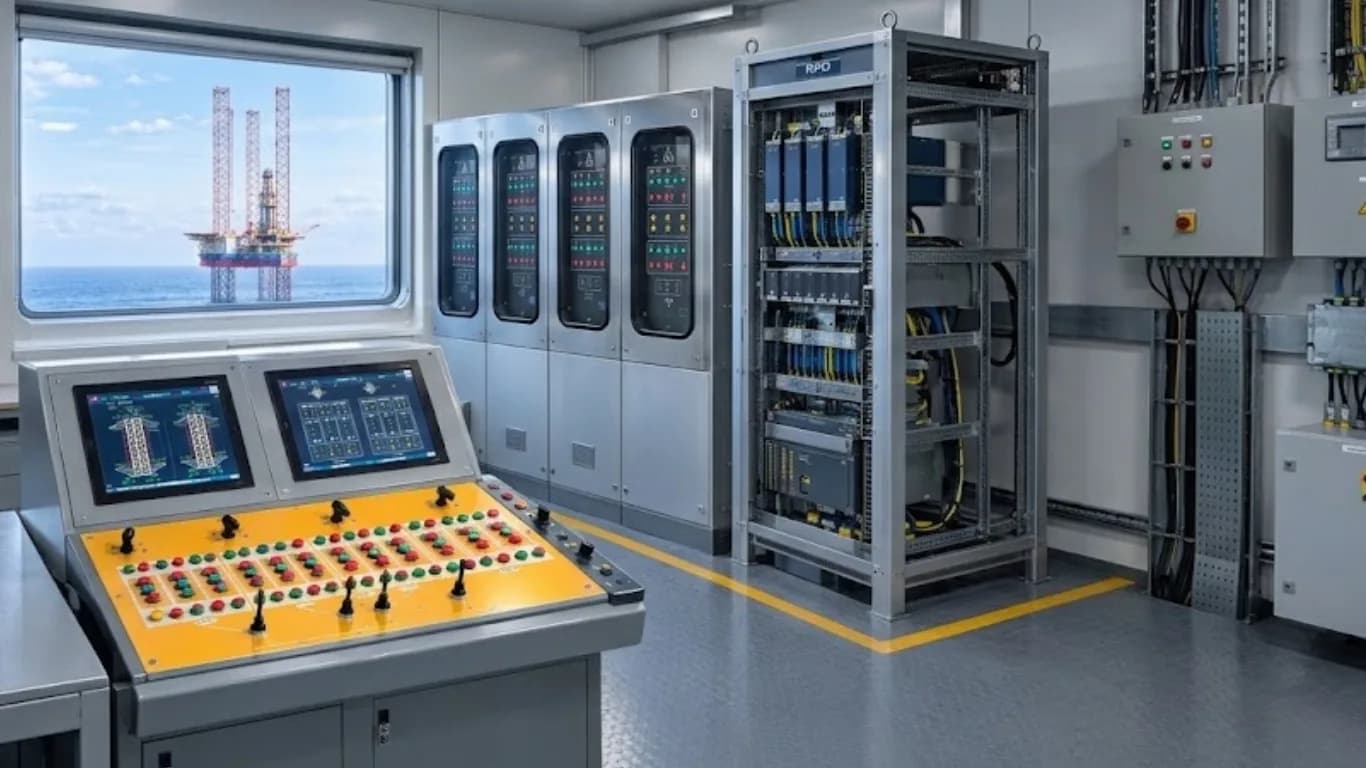
Jack-up Rig — PLC Upgrade for Jacking System Control
Problem · SMEC scope · Architecture
- Problem
- An offshore drilling contractor needed a simple, reliable PLC control system for the hydraulic functions of its four-legged electrohydraulic jack-up system, to improve the efficiency, safety and precision of jacking operations.
- SMEC scope
- SMEC developed the PLC-based jacking control system, integrated the motor control station with an alarm panel and SCR interfacing, installed analogue stroke movement monitors on the hydraulic cylinders and an inclination monitoring and alarm system, and upgraded communication to optic fiber.
- Architecture
- PLC jacking control, motor control station with alarm panel and SCR interface, four analogue stroke movement monitors, inclination monitoring and alarms, and an optic fiber communication link.

Drilling Rig in Dry Dock — Gas Detection and Pneumatic System Repair
Problem · SMEC scope · Architecture · Testing · Outcome
- Problem
- Before the rig could return to service from dry dock, its gas alarm system was in critical condition and non-compliant, with corrosion inside the gas watch panel, a 4–5 second delay in leak response and erratic pneumatic regulators.
- SMEC scope
- SMEC refurbished the gas watch panel and recalibrated its detection thresholds, supplied and installed OEM-grade H₂S detectors, Ex purge controllers and isolator barriers, replaced the display units and the Ex junction-box cable connector, and replaced the pneumatic regulators and gas trap motors with faster-response units.
- Architecture
- Compatibility of the new detectors and display units verified with the rig’s SCADA and alarm interface.
- Testing
- Full system recalibration with gas simulation kits; leak testing and pressure profiling under simulated H₂S discharge; on-site function testing of every alarm, response and shut-off sequence; traceable test reports and certification to offshore audit protocols.
- Outcome
- Leak response time cut from a 4–5 sec delay to under 1.2 sec; gas alarm system health from critical to fully restored; compliance from non-compliant to ready for commissioning; rig cleared for recommissioning within the scheduled dry dock timeline.
Engineering Approach — Diagnosing the full fluid-power control chain
Hydraulic and pneumatic faults often arise from the interaction of mechanical condition, pressure supply, valve response, instrumentation and electrical commands. Diagnosis therefore needs to trace the system from power source through manifold and actuator to feedback and interlocks.
A repair or modernisation package may involve leak checks, valve or actuator refurbishment, control-panel work, PLC interfaces and functional testing under defined operating conditions. For marine and offshore equipment, access, equipment duty and safe machinery behaviour are central to the execution plan.
Common questions
Can hydraulic equipment be integrated with PLC controls?
Yes, subject to actuator characteristics, valve interfaces, pressure/position feedback and safety requirements.
Does the scope include marine engine remote controls?
Marine pneumatic and electro-pneumatic remote-control systems are a relevant application, with exact repair or retrofit scope assessed case by case.
What details help diagnose a fluid-power fault?
Hydraulic/pneumatic schematic, equipment model, pressure and flow ratings, fault symptoms and available photographs.
Have a Hydraulics & Pneumatics project to discuss?
Share the existing equipment, drawings, project location and scope of work.
Send the circuit diagram, make/model and fault description. Recommended RFQ inputs: project/asset, existing OEM/model, scope, drawings or specification, required date, site location, and any shutdown/mobilization constraint.
AE · Middle East & International
SMEC Oil & Gas Solutions LLC
Abu Dhabi, UAE
IN · India
SMEC Automation Pvt Ltd
Kochi, Kerala, India