
Technical Knowledge
Case Studies
Real Engineering Challenges. Proven Technical Expertise.
Explore SMEC's engineering experience across oil & gas, offshore drilling, industrial automation and critical infrastructure.
From modernising ageing control systems and upgrading electrical infrastructure to delivering customised automation solutions, system integration and commissioning, our project case studies highlight the challenges addressed, engineering approaches adopted and solutions delivered.
Discover how engineering expertise translates into practical solutions for demanding industrial environments.
Engineering Case Studies
In this collection
Project evidence

Offshore Drilling Rig — Real-Time Remote Monitoring of Drilling Instrument Parameters
Problem · SMEC scope · Architecture
- Problem
- An offshore oil and gas operator needed secure, real-time access to critical drilling instrument parameters from remote offices, without modifying the existing control systems.
- SMEC scope
- SMEC designed and deployed a real-time remote monitoring system on its own Edge IoT unit, reading data already available in the existing Drilling Management System (DMS) PLC — no additional instrumentation — and publishing it to an authenticated cloud application.
- Architecture
- Ethernet handshake between the DMS PLC and the SMEC Edge IoT unit over CAT 6 cabling and industrial-grade switches; data pushed to AWS Cloud at user-configurable intervals, with up to 4 concurrent authenticated users per location and error alerts on remote PCs if the internet link fails.

Offshore Rig — 1350 HP Top Drive VFD System Panel
Problem · SMEC scope · Architecture · Testing
- Problem
- An offshore operator needed a high-capacity 1350 HP top drive VFD system panel that would deliver precise control and survive extreme drilling conditions from -20°C to +50°C, plugging into the existing rig power and control systems with no margin for retrofit errors offshore.
- SMEC scope
- SMEC supplied and installed the complete top drive VFD system in a 20-ft container: drive section, auxiliary section, distribution panel with step-down transformer, PLC section and plug panels for all incoming and outgoing feeders.
- Architecture
- Oil-cooled heavy-duty VFD on a 600 VAC, 1800 A, 3-phase supply, with custom drive tuning, harmonic filters and surge protection; segregated drive, PLC and auxiliary zones; dual redundant 5-ton AC units under PLC cooling control; multi-point fire detection linked to ESD logic, and PLC alarms for temperature, humidity and doors.
- Testing
- Full logic tested before deployment, and FAT simulated with the client before shipment.
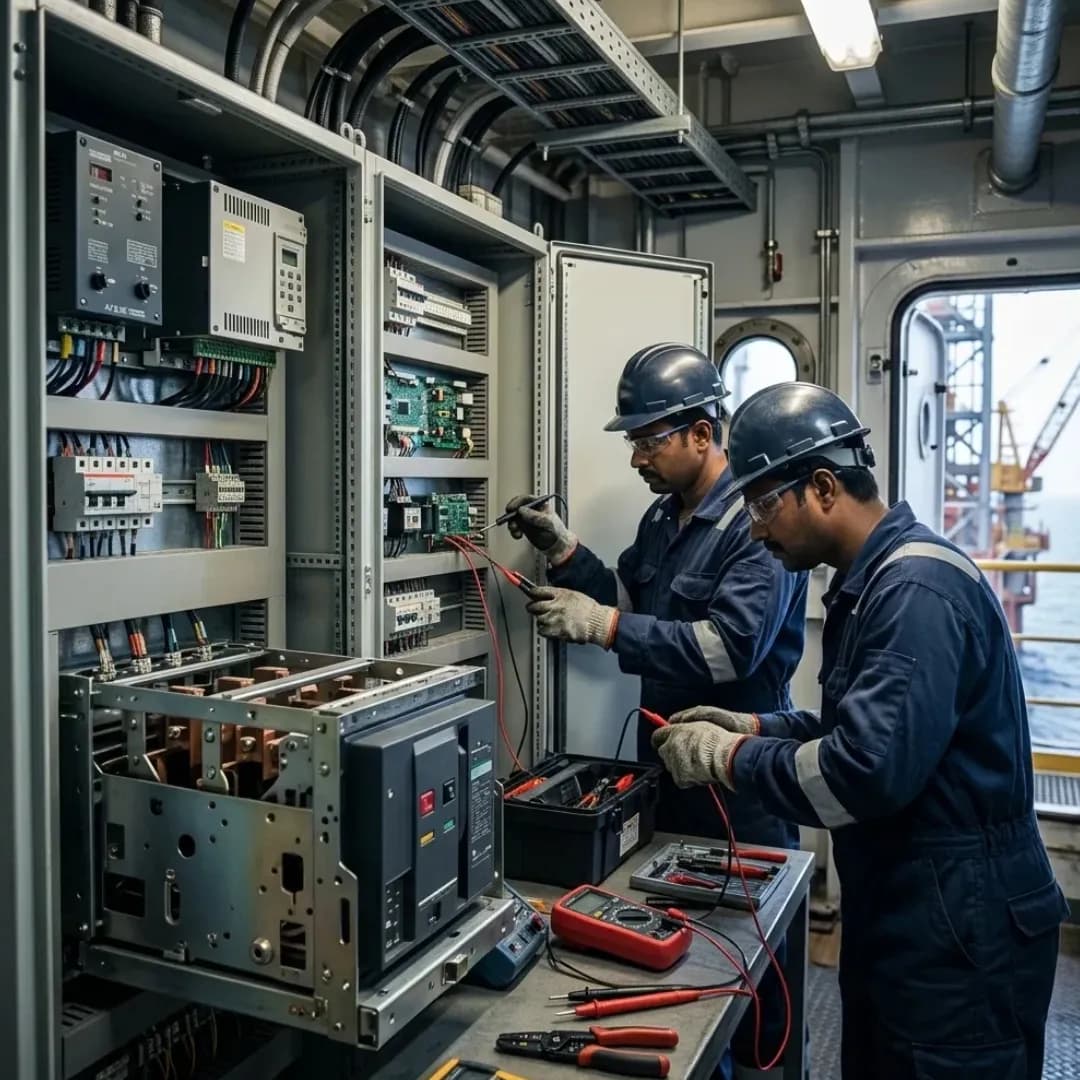
Offshore Drilling Rigs — In-Situ Repair of AC and DC Modules, PCBs and ACBs
Problem · SMEC scope · Testing · Outcome
- Problem
- Under a rate contract, the operator needed a partner to diagnose and repair complex PCB systems across critical rig zones — driller’s console, engine room and control room — on non-standard legacy hardware degraded by salt-laden air, including failing surge suppression and power limit PCBs that affected generator safety.
- SMEC scope
- SMEC deployed a marine electronics team for in-situ and workshop repair of AC and DC modules, PCBs, heat sink–IGBT assemblies and air circuit breakers: reverse engineering of damaged PCBs on proprietary test jigs, hot-swap module servicing to keep rigs running, remote support to rig crews, and tracked logistics from the helibase to SMEC’s facility and back.
- Testing
- Functional simulation of generator exciter and auxiliary motor control PCBs before reinstallation; onboard functional testing with portable test benches and calibrated instruments; electro-thermal profiling of heat sinks; testing and calibration of 460V/600V AC ACBs. Every job documented with test logs and compliance records.
- Outcome
- PCB turnaround cut from 10–12 days to 72–96 hours; equipment downtime from 18+ hours to under 6 hours on average; ACB fault recurrence from 2x a month to 0 over 90 days+; field module failure below 1% after service, with 100% component functionality restored.
Offshore Drilling Rig — SCR System Inspection and Upgrade
Problem · SMEC scope · Architecture
- Problem
- An ageing SCR system had obsolete modules no longer supported by the OEM, overheating cables, voltage drops, failing relay panels, a mix of control voltages and no local control for the mud pumps. SMEC’s visual, thermal and component inspection, with the onboard technical staff, set out the risks.
- SMEC scope
- SMEC replaced obsolete logic and contactors with a PLC-based control system, fitted new cables and voltage regulation circuits and improved airflow in the SCR compartments, installed a new relay and metering panel, standardised all control circuits to one voltage, and added a dedicated mud pump local panel.
- Architecture
- Seven SCR units: SCR-1 to SCR-4 for draw works and mud pump selection, SCR-5 for mud pump 3 via PLC and VFDs, and SCR-6 and SCR-7 for the top drive.
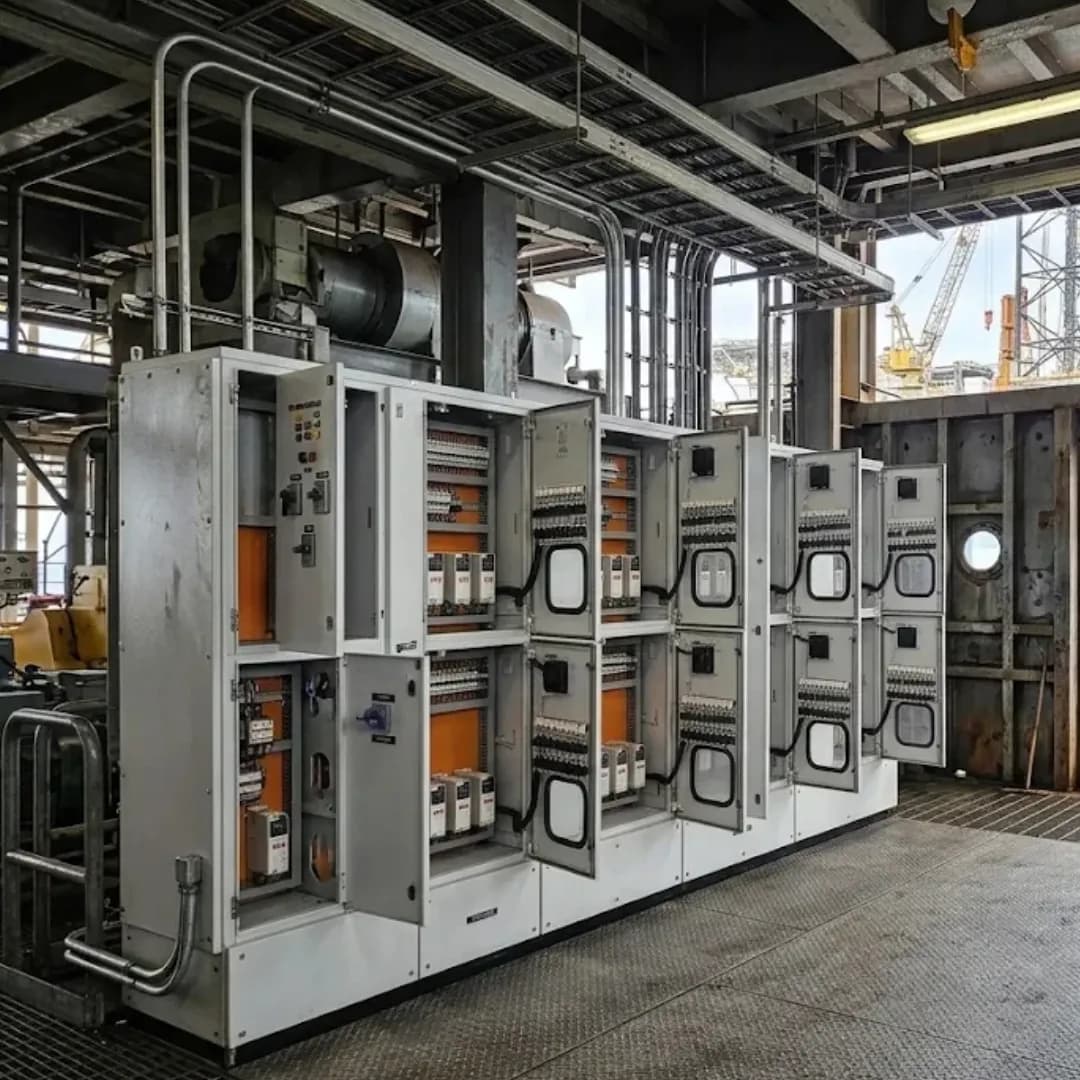
Offshore Rig — Emergency MCC, Transformer and DG Switchboard Upgrade
Problem · SMEC scope · Architecture · Testing
- Problem
- The rig’s emergency power system needed upgrading to improve reliability, efficiency and safety in emergencies, minimise downtime and make maintenance easier.
- SMEC scope
- SMEC designed, manufactured, supplied, installed and commissioned a DG switchboard panel in the MSB room, a DG power isolation panel near the generator, a new transformer and a new Emergency Motor Control Centre, and supplied, installed and commissioned a new emergency generator excitation unit.
- Architecture
- Main switchboard extended with 100x8mm copper bus bars, 4-run per phase, and an additional generator section; 1250 kVA, 600/480 V delta-star dry-type transformer with Class H insulation; modular EMCC with compact bus bars in a prefabricated enclosure for a constrained space; arc-fault detection relays on the isolation panel; Basler excitation unit for the 1625 kVA, 1300 kW emergency alternator.
- Testing
- Load flow analysis for the switchboard extension; harmonic analysis and insulation testing on the transformer; real-time voltage regulation testing and excitation tuning on the generator. Every item installed and commissioned, and confirmed working by rig staff.

Jack-up Rig — Retrofit and Synchronization of Six Diesel Generators
Problem · SMEC scope · Architecture · Testing
- Problem
- An obsolete GE DG control system limited synchronization, load sharing and protection across the rig’s six 1050 kW diesel generators.
- SMEC scope
- SMEC retrofitted all six DGs with modern speed control, AVR and synchronization modules, tuned speed, voltage and droop for balanced load sharing, configured auto deloading and protection schemes, and handed over updated drawings, CT/PT settings and program backups.
- Architecture
- Woodward 2301A governors for speed control, EMRI LX20 AVRs for voltage regulation, and a DEIF PPU300 for automatic synchronization, load sharing and protection; 600 VAC at 1200 RPM across all six generators.
- Testing
- Each DG started and calibrated individually; manual synchronization by synchroscope, then automatic synchronization through the PPU300; protections verified. All six DGs ran stably and passed the rig endurance test and jacking operations under real load.
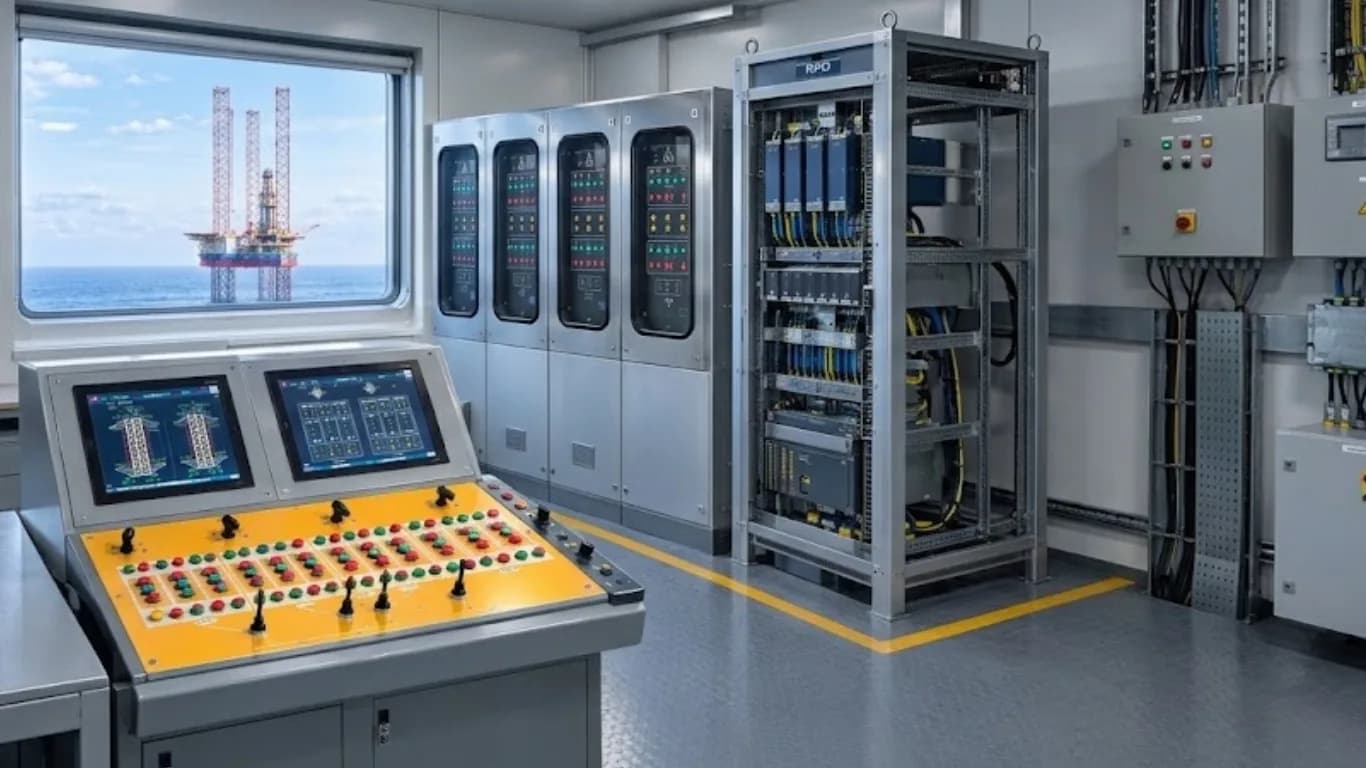
Jack-up Rig — PLC Upgrade for Jacking System Control
Problem · SMEC scope · Architecture
- Problem
- An offshore drilling contractor needed a simple, reliable PLC control system for the hydraulic functions of its four-legged electrohydraulic jack-up system, to improve the efficiency, safety and precision of jacking operations.
- SMEC scope
- SMEC developed the PLC-based jacking control system, integrated the motor control station with an alarm panel and SCR interfacing, installed analogue stroke movement monitors on the hydraulic cylinders and an inclination monitoring and alarm system, and upgraded communication to optic fiber.
- Architecture
- PLC jacking control, motor control station with alarm panel and SCR interface, four analogue stroke movement monitors, inclination monitoring and alarms, and an optic fiber communication link.

Drilling Rig in Dry Dock — Gas Detection and Pneumatic System Repair
Problem · SMEC scope · Architecture · Testing · Outcome
- Problem
- Before the rig could return to service from dry dock, its gas alarm system was in critical condition and non-compliant, with corrosion inside the gas watch panel, a 4–5 second delay in leak response and erratic pneumatic regulators.
- SMEC scope
- SMEC refurbished the gas watch panel and recalibrated its detection thresholds, supplied and installed OEM-grade H₂S detectors, Ex purge controllers and isolator barriers, replaced the display units and the Ex junction-box cable connector, and replaced the pneumatic regulators and gas trap motors with faster-response units.
- Architecture
- Compatibility of the new detectors and display units verified with the rig’s SCADA and alarm interface.
- Testing
- Full system recalibration with gas simulation kits; leak testing and pressure profiling under simulated H₂S discharge; on-site function testing of every alarm, response and shut-off sequence; traceable test reports and certification to offshore audit protocols.
- Outcome
- Leak response time cut from a 4–5 sec delay to under 1.2 sec; gas alarm system health from critical to fully restored; compliance from non-compliant to ready for commissioning; rig cleared for recommissioning within the scheduled dry dock timeline.
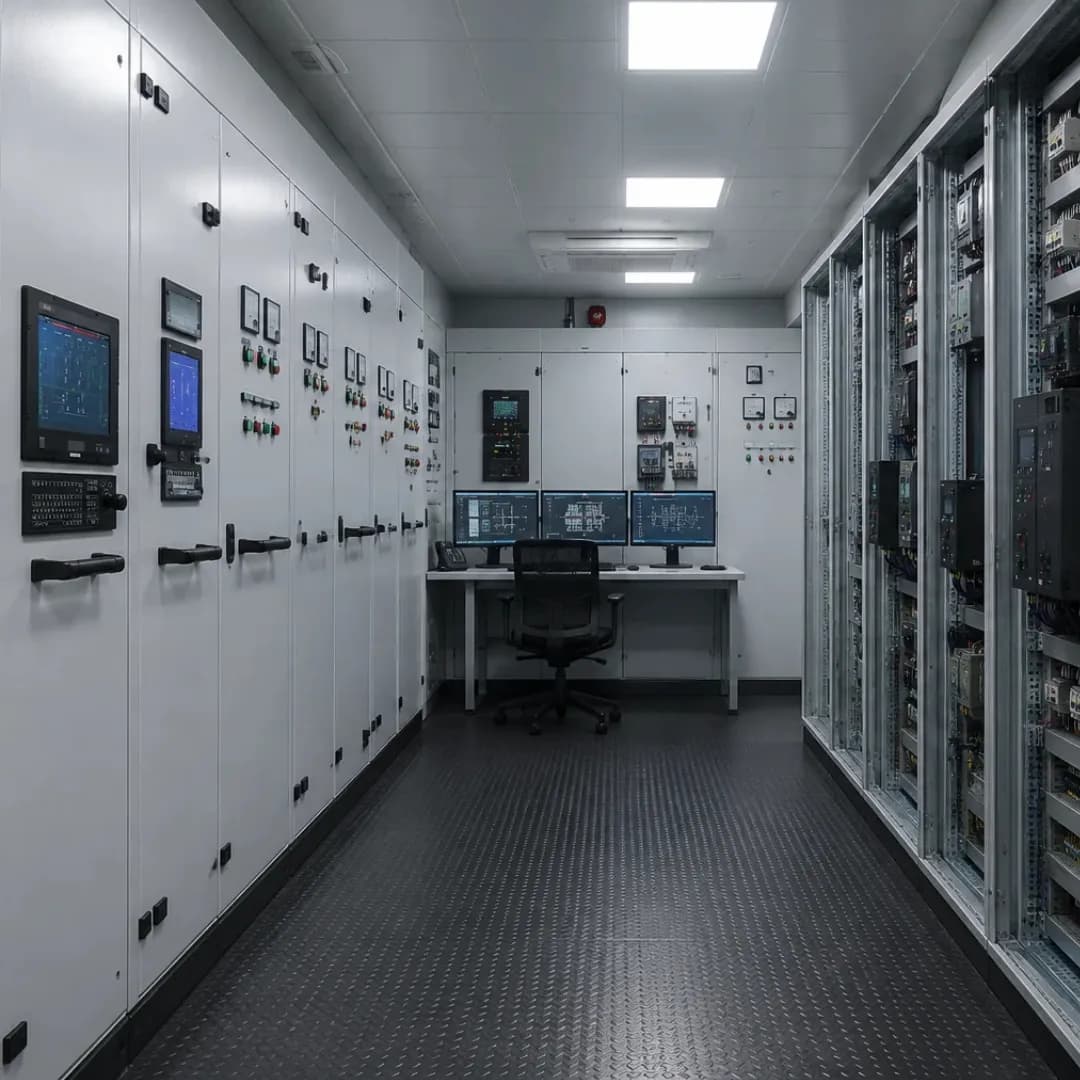
2000 HP Drilling Rig — Full Reactivation of the VFD System
Problem · SMEC scope · Architecture · Testing · Outcome
- Problem
- The rig faced critical downtime with inactive, aged drive systems: a dismantled generator control system with missing ACBs, bus bars, PTs, CTs and AVRs, damaged panels and wiring, crane-damaged enclosures, missing static converters and harmonic filters, and a water-damaged BOP control panel.
- SMEC scope
- SMEC restored and reactivated the VFD system with the VFD house, driller’s console, TDS house, MCC and BCU: replaced ACBs, AVRs, PTs and CTs, serviced reusable Woodward controllers, built new copper bus bars, rewired and reconditioned the panels, rebuilt the enclosures, installed ABB VFDs and filters, and supplied a new PLC-based BOP control system. Engineering and as-fitted drawings were delivered.
- Architecture
- Three VFDs for generator, draw works and rotary; PLC ladder logic and Woodward governor PID loops reconfigured and VFD parameters synced with generator load sharing; PLC monitoring of power factor and phase imbalance; BOP logic linked to remote monitoring over redundant fiber optics, with full diagnostics from the driller’s console.
- Testing
- Insulation resistance, continuity checks and load calculations on the rewired panels; interlocks simulated before live testing. The system passed FAT.
- Outcome
- System uptime from offline to 100% operational; remote command response under 1.5 sec; power load management stable with auto sync; fully energized within the drydock schedule.
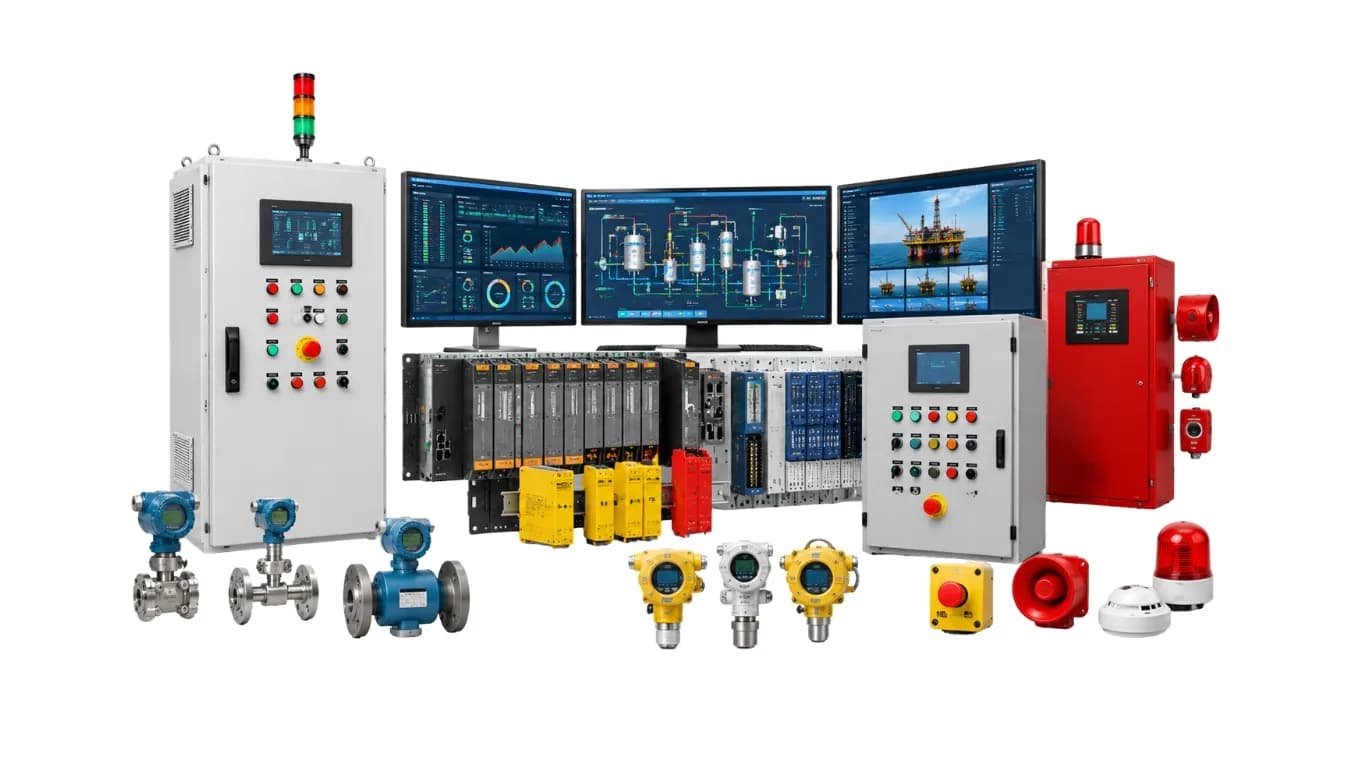
Petroleum Installation — Automatic Fire Fighting System with Redundant SIL PLC and SCADA
Problem · SMEC scope · Architecture · Testing
- Problem
- The facility needed an automatic fire fighting system where a failure in the suppression logic, signal loss over long cable runs, inconsistent pressure data or a clogged solenoid valve could not be allowed to compromise the response to a fire.
- SMEC scope
- SMEC supplied and installed redundant SIL PLC control panels integrated with a SCADA system, signal, control and optical fiber cabling, pressure transmitters and solenoid valves, and carried out the civil works — cable trays and panel foundations — within the timeline.
- Architecture
- Dual-redundant SIL-rated PLC panels with automatic switchover on panel or logic failure, integrated with SCADA; cabling and fiber routed to minimise EMI between valves, transmitters and PLCs; solenoid valves with upstream strainers and filters.
- Testing
- Pressure transmitters calibrated to OEM standards and verified through simulation testing; the system was erected, tested and commissioned, and the client certified the work complete.

Oil & Gas Facilities — Retrofit Solutions and Advanced Control Systems
Problem · SMEC scope · Architecture · Testing · Outcome
- Problem
- Ageing equipment and harsh, hazardous environments: an outdated MCC that had to be retrofitted live, multi-gas detection in Zone 1 areas, a BOP control system on ageing infrastructure, and a remote well site needing reliable telemetry with minimal on-ground supervision.
- SMEC scope
- SMEC retrofitted an MCC with LSIG-configured ACBs, digital motor protection relays and Form 4B panels in a phased retrofit with no downtime; delivered a Gas Watch Panel with SIL-2 sensors and 2oo3 voting; developed primary and secondary injection test kits for protection systems; designed, installed and commissioned a PLC-based BOP control system with ring-topology networking; and built a custom RTU panel for the well site.
- Architecture
- RTU panel in a Zone 1-certified IP66 flameproof enclosure, with redundant 24VDC UPS-backed power, Modbus RTU/TCP and DNP3, fail-safe DI/DO with watchdog timers, data buffering and timestamped event logging, and secure VPN remote access.
- Testing
- RTU panel FAT-tested by SMEC; Gas Watch Panel components verified before deployment.
- Outcome
- RTU panel: seamless SCADA integration across 40+ km of pipeline infrastructure, and on-site intervention reduced by 65%.
Send the requirement
Share the existing equipment, drawings, project location and scope of work.
Explore the relevant engineering page or send a technical requirement. Recommended RFQ inputs: project/asset, existing OEM/model, scope, drawings or specification, required date, site location, and any shutdown/mobilization constraint.
AE · Middle East & International
SMEC Oil & Gas Solutions LLC
Abu Dhabi, UAE
IN · India
SMEC Automation Pvt Ltd
Kochi, Kerala, India