India's Gas Backbone - The ₹1,700 Crore Bet That Fed a Nation
Before 1987, India was burning its own natural gas.
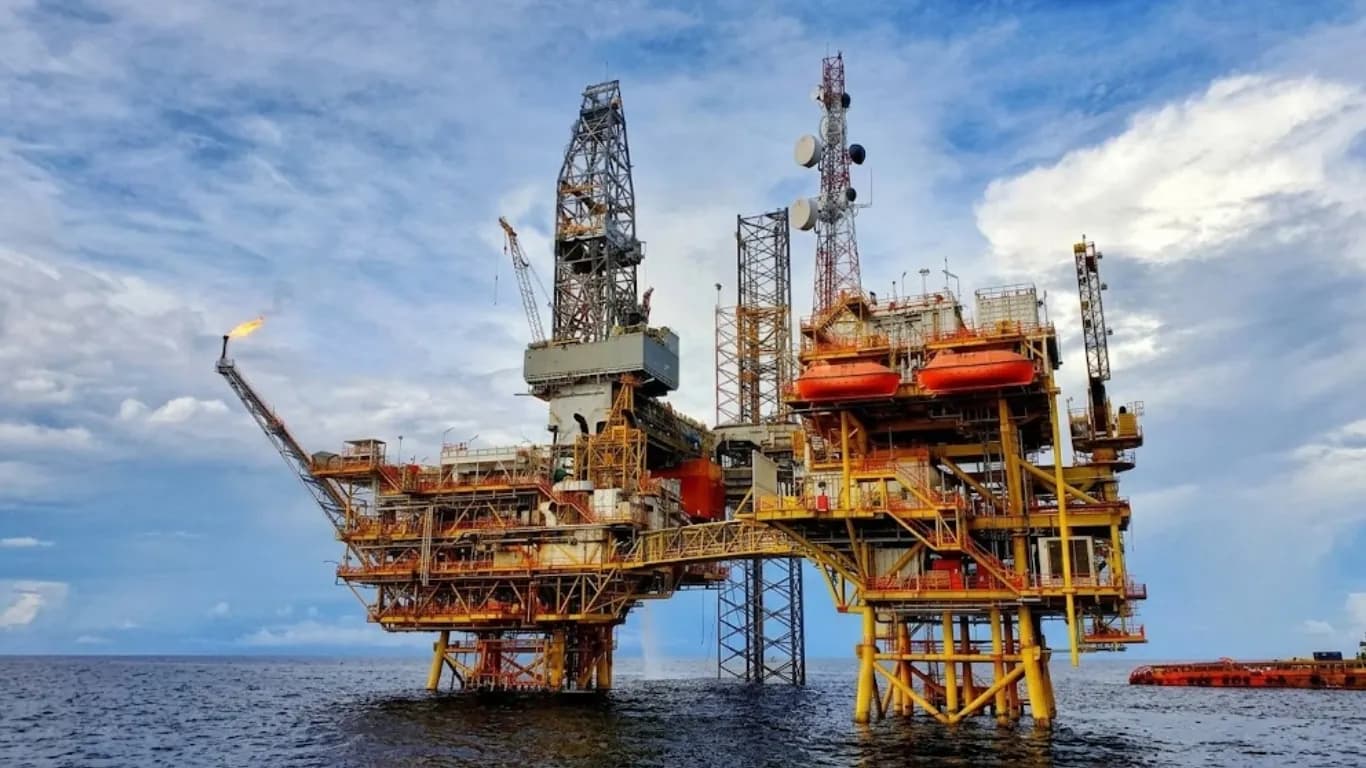
At Bombay High , 160 km off the Mumbai coast , gas extracted alongside crude had nowhere to go. No pipeline. No network. No infrastructure.
So it was flared into the Arabian Sea sky.
While India was spending scarce foreign exchange importing urea it couldn't produce domestically.
The HBJ Pipeline ended that contradiction.
THE NUMBERS THAT BUILT INDIA
- Project approved: April 1984
- GAIL incorporated: August 1984 , created specifically for this pipeline
- Construction began: October 17, 1986
- Commissioned: August 1987
- Cost: ₹1,700 crore ($1.7 billion USD)
- Initial length: 1,750 km , Gujarat to Uttar Pradesh
- Pipe diameter: 914.4 mm (36 inches)
- Crosses: 69 rivers, 300 roads
- Initial capacity: 18.2 MMSCMD
- Compressor stations: 4 - Hazira, Morena, Vijaipur, Auraiya
What makes this remarkable: the first pipe was laid with half the targeted workforce on the ground, no finalised engineering drawings, and 200 km laid in a month against a target of 150 kilometres.
They commissioned it in 10 months anyway.
WHAT IT UNLOCKED
- 145 million tonnes of urea produced
- LPG delivered to 70 million households
- Foundation for India's CNG network
- Fertilizer imports reduced by ~40%
- Power, petrochemicals, and city gas across 6 states
- Fertilizer plants now "Priority Sector-2" , 70% gas guaranteed
IFFCO, NFL, KRIBHCO - the fertilizer plants feeding Indian agriculture today trace their gas supply to this single corridor.
THE EXPANSION
1991: Extended to Jagdishpur, UP - full HBJ route complete.
1998–99: GREP adds 505 km loop. Capacity doubles to 33.4 MMSCMD.
2004: DVPL commissioned - 610 km, connecting India's first LNG terminal at Dahej. Delivered 6 months ahead of schedule. Won IPMA Silver Medal.
2015: Gas consumption grew +40% from 140.4 → 197.1 MMSCMD.
2025: Combined network - 5,500+ km. Capacity: 107 MMSCMD. Nearly 6x original design.
2030: Target 5M metric tonnes green hydrogen production.
GAIL today operates 16,421 km of pipelines. 82% of India's total gas network traces back to this one project.
THE FUTURE
India's National Gas Grid targets 35,000 km by 2030.
Hydrogen blending trials are already underway on India's gas grid. The same 36-inch steel laid in 1987 may carry green hydrogen blends before this decade ends.
The pipe doesn't retire. It evolves.
India didn't build the HBJ Pipeline because the demand was there.
It built the pipeline , and the demand followed.
₹1,700 crore in 1984.
145 million tonnes of urea. 70 million homes. A national grid at 107 MMSCMD.
That is what infrastructure built before certainty looks like.
📖 Download the Pipeline Modernization Handbook - Link in the comment