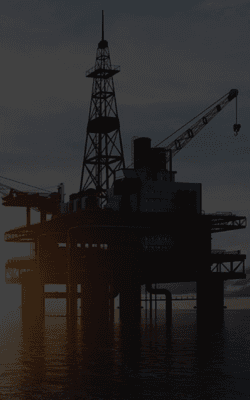

If Sagar Samrat symbolized discovery, Sagar Shakti symbolized something far harder to sustain: continuity.
Mumbai High did not become India’s offshore backbone because oil was found. It remained India’s offshore backbone because assets like Sagar Shakti kept drilling, intervening, upgrading, and adapting, year after year, under monsoons, ageing systems, tightening safety expectations, and shifting field priorities.
This is the in-depth, engineering-first history of Sagar Shakti, from commissioning in 1982 to its relevance today, and what it reveals about India’s offshore maturity.
1. 1982: The Birth of a Workhorse & The "Sagar Doctrine"
The story of Sagar Shakti begins at the Robin Shipyard in Singapore in early 1982. This was a pivotal moment for India’s energy sector. Realizing that the nation could no longer rely on expensive foreign-chartered rigs, the Oil and Natural Gas Corporation (ONGC) launched the "Sagar Doctrine", a strategic mandate to own, operate, and maintain its own fleet of offshore drilling assets.
The Engineering Blueprint The Sagar Shakti was commissioned as a Robco 300-C design (later evolving into the ETA Robray 300-C). Unlike its predecessor, the Sagar Samrat, which was a "jack-up/drillship hybrid", the Shakti was engineered as a pure, high-stability cantilever jack-up rig.
- Engineering Capability: Designed to operate in water depths of up to 300–350 ft and capable of drilling to a staggering depth of 25,000 ft.
- Strategic Intent: It entered service exactly as Mumbai High transitioned from "Exploration" to "Throughput Optimization." The Shakti was not an experimental asset; it was a high-intensity execution engine built for repeatable drilling and workover operations.
The Maiden Voyage & The "VCR" Footnote
- September 1982: The rig was officially commissioned.
- October 1982: It steamed across the Indian Ocean, arriving in the Arabian Sea to begin its four-decade legacy.
Interestingly, early parliamentary records from 1983 reveal a "human" side to this historical arrival. When the rig first touched base at Uran in October 1982, it was searched by customs. The discovery of electronic gadgets and VCRs on board became a minor scandal of the time, a quirky reminder of the slightly "wild" and frontier-like atmosphere of early 1980s offshore life.
Transitioning to the Industrial Era By the time Sagar Shakti spudded its first well, the challenge in Mumbai High was no longer finding hydrocarbons, but extracting them safely and efficiently at scale. Sagar Shakti became the backbone of this transition, proving that India could not only find oil but could build the industrial infrastructure to sustain it.
Summary of Early Technical Specs (The 1982 Baseline)
2) 1980s–1990s: The Sister-Rig Era and Offshore Standardization
ONGC structured its jack-up fleet into sister pairs, and Sagar Shakti was paired with Sagar Gaurav.
This was not a naming coincidence, it was an operational strategy.
Standardization enabled:
- Shared spares philosophy
- Consistent maintenance practices
- Faster crew familiarization
- Reduced learning curves during redeployment
In offshore operations, time lost to adaptation is often risk multiplied. Sister rigs reduced that risk.
During this phase, Sagar Shakti supported:
- Development drilling across Mumbai High
- Workovers and interventions as reservoirs matured
- Campaign-style offshore execution under tight weather windows
This period established a core offshore truth:
Offshore reliability is built through repeatability , not one-off excellence.
3) Early Control Philosophy: Human-Centric by Necessity
In its early decades, Sagar Shakti operated with:
- Predominantly analog instrumentation
- Relay-based logic and early PLC systems
- Local indications and manual confirmations
- Heavy dependence on operator experience
Control rooms were not information-rich environments. They were judgment-intensive environments.
Operators compensated for:
- Limited early warning
- Sparse alarm prioritization
- Minimal automation support
This human-centric philosophy worked, but it carried inherent limits as systems aged and complexity increased.
4) 2007: Two Decades In — Still Central to India’s Drilling Capacity
By 2007, Sagar Shakti had crossed 25 years offshore, yet it remained firmly part of India’s active drilling capacity.
Industry reporting at the time continued to list Sagar Shakti among ONGC’s working rigs, a quiet but powerful indicator:
Longevity offshore is not accidental. It is operationally earned.
At this stage:
- The rig was no longer “new” by any global benchmark
- But it remained economically and operationally indispensable
5) 2007–2015: The Critical Trade-Off — Utilization vs. Lay-Up Repairs
This period defines why Sagar Shakti is an engineering case study, not just a timeline.
In 2007, ONGC formulated a policy for major lay-up repairs / dry-docking of jack-up rigs, with Sagar Shakti planned for intervention around 2008.
What followed is a familiar offshore reality:
- Continuous operational demand
- Limited windows for extended lay-up
- Rigs kept working beyond planned intervention cycles
Recommended by LinkedIn
Audit records later highlighted that:
- Sagar Shakti incurred significant out-of-cycle costs between 2010–14
- These costs were linked to delayed major repairs and ageing systems
This phase introduced a dangerous but common condition:
Maintenance Debt + Obsolescence Drift
The risk moved away from steel and structure, and into systems:
- Instrumentation reliability degraded gradually
- Control logic evolved incrementally, often undocumented
- Alarm volumes increased without rationalization
- Maintainability under live operations became harder
Offshore assets rarely fail catastrophically first. They fail by drift , unnoticed until margins disappear.
6) 2016–2020s: When Modernization Becomes a Systems Problem
As Sagar Shakti matured further, modernization priorities shifted decisively.
The focus was no longer:
- Large mechanical replacements
It became:
- Control, instrumentation, alarm, and safety subsystems
Key upgrade themes included:
- PLC-based alarm and annunciation systems
- Audio-visual alarm management improvements
- Instrumentation refresh for accuracy and reliability
- Enhanced safety-system visibility
This is where brownfield offshore engineering becomes complex.
Not because technology is difficult, but because:
- Systems are live
- Documentation is fragmented
- Operator muscle memory must be preserved
- Integration errors carry disproportionate risk
7) 2024–2026: Still Part of ONGC’s Jack-Up Ecosystem
As of 2024–2026, Sagar Shakti continues to be listed within ONGC’s managed jack-up rig inventory, alongside other sister units.
This confirms something critical:
Sagar Shakti is no longer a “legacy asset.” It is a managed, life-extended offshore system .
ONGC Sagar Shakti — Key Milestones (Lifecycle & Continuity Focus)
Final Reflection: More Than a Rig, A Measure of Continuity
Sagar Shakti was never meant to symbolize a beginning. It was meant to sustain one.
While Sagar Samrat marked the moment India found offshore oil, Sagar Shakti carried the far harder responsibility that followed, returning to the field, year after year, ensuring Mumbai High continued to produce long after discovery faded into history.
Its legacy is not defined by a single breakthrough, but by decades of disciplined execution:
- drilling campaigns completed under monsoon pressure
- systems adapted as technology evolved
- risks managed before they became incidents
- continuity preserved when stopping was not an option
Sagar Shakti’s story is not loud. It is steady.
And in offshore engineering, steadiness is not ordinary—it is earned.
For more than four decades, it has quietly demonstrated what national energy security truly depends on: engineering judgment sustained over time.
That is why Sagar Shakti matters—not as a monument, but as a benchmark.
If Sagar Samrat taught India how to discover offshore energy, Sagar Shakti taught India how to sustain it.
A Note from SMEC
This perspective is shaped by long-term field exposure and engineering involvement with offshore assets such as Sagar Shakti.
At SMEC Automation, we don’t celebrate offshore systems for how they begin—but for how carefully they are sustained. Because in offshore operations, the future is secured not by discovery alone, but by continuity without compromise.
Happy Reading!