The Refinery That Quietly Reshaped Kerala's Industrial Future.
Long before Kochi emerged as one of India's energy and logistics gateways, Ambalamugal was a quiet village on the banks of the Periyar.
Few would have imagined this riverside landscape would one day become home to one of India's most sophisticated refineries.
But why Kochi?
Its deep-water harbour, Arabian Sea shipping access, established port and strategic location to serve Kerala, Karnataka and Tamil Nadu made Kochi the ideal site for a modern refinery.
In 1963, Cochin Refineries Limited (CRL) was incorporated as a joint venture between the Government of India, Phillips Petroleum Company (USA) and Duncan Brothers of Calcutta. Phillips brought refinery engineering, process technology and global operating practices that shaped one of India's earliest large-scale refineries.
1966 | The First Flame
Construction took 29 months. On 23 September 1966, Prime Minister Indira Gandhi herself inaugurated the first unit , commissioned at 2.5 MMTPA, built to fuel South India's growing economy.
Its evolution reflected India's own energy journey.
1973 – 3.3 MMTPA • 1984 – FCCU & 4.5 MMTPA • 1989 – Aromatics • 1994 – 7.5 MMTPA • 2000 – Low-sulphur diesel.
The refinery did more than process crude, it transformed Ambalamugal.
Housing, schools, hospitals and jobs created an industrial township, attracting fabrication yards, maintenance contractors and engineering companies.
2006 | A New Chapter
The merger with BPCL paved the way for the refinery's biggest transformation.
The ₹16,500 crore IREP increased capacity to 15.5 MMTPA, enabled heavier crude processing and made Kochi India's largest public-sector refinery.
The transformation continued in 2021 with the Propylene Derivative Petrochemical Project (PDPP), marking Kochi's shift from a conventional fuel refinery to an integrated refining and petrochemical complex.
Engineering Beyond the Refinery Fence
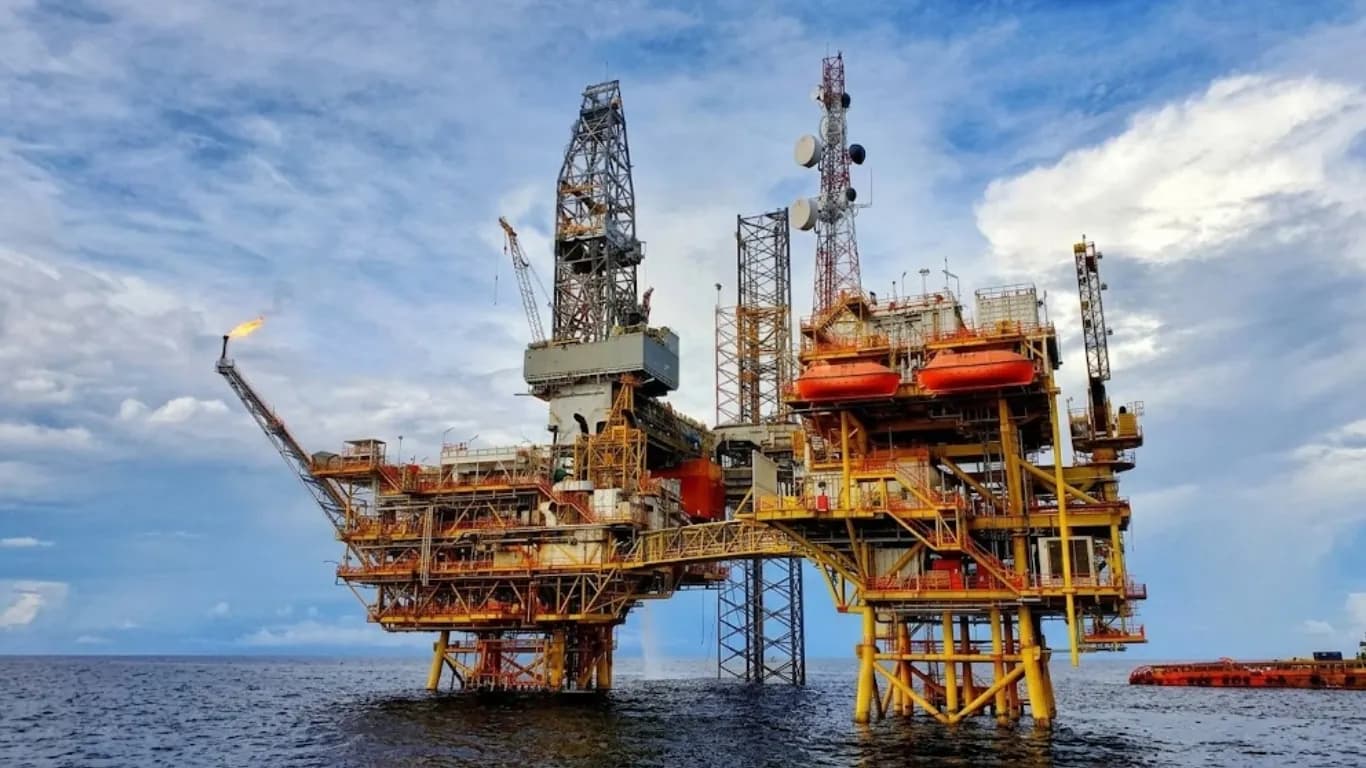
In 2007, an offshore Single Point Mooring (SPM) enabled VLCCs, unable to berth at Kochi Port, to discharge crude through submarine pipelines directly to the refinery.
Alongside the nearby Petronet LNG Kochi Terminal, the refinery has helped transform Kochi into one of India's most important integrated energy corridors, where refining, LNG imports, petrochemicals and marine energy infrastructure coexist.
The Next Chapter
Today, Kochi Refinery supplies fuels across southern India while supporting aviation, defence and marine sectors. With plans to expand to 18 MMTPA and continued investments in cleaner fuels, petrochemicals and lower-carbon technologies, its story is far from over.
Sometimes, the most remarkable industrial landmarks aren't remembered for the day they were built.
They're remembered because they never stopped evolving.
📌Full timeline in comments.