Most nations rent their offshore drilling capability.
In the 1980s, India decided to build it.
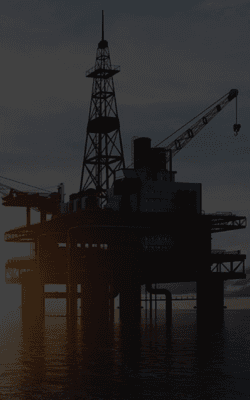
Sagar Kiran, its name meaning "ray of light from the sea" in Sanskrit , was not imported, not chartered, and not assembled at a foreign yard under a foreign flag. It was designed, fabricated, and commissioned at Mazagon Dock in Bombay. It was built by Indian engineers, for Indian waters, to support India's most important energy asset , the Mumbai High oilfield.
It has been operating in the Arabian Sea for over 37 years.
It is now undergoing the most significant refit of its life , at Cochin Shipyard's newly inaugurated large drydock, the first jack-up rig to enter that facility.
This is the complete story. From the world Sagar Kiran was born into, to what it is becoming today.
India's Oil and Gas Commission - A Nation Bets on Itself
To understand why Sagar Kiran matters, you need to go back thirty years before it was built.
In 1955, India established a small Oil and Gas Directorate under the government. It was elevated on 14 August 1956 , India's tenth Independence Day , into the Oil and Natural Gas Commission, with a statutory mandate to find and develop hydrocarbons across the country.
The early decades were onshore. In the muddy plains and tea gardens of Assam, ONGC coaxed oil from the Lakwa and Geleki fields. In Cambay and Ankleshwar in Gujarat, it drilled new potential into being. Every discovery built institutional capability , seismic imaging, drilling discipline, reservoir science , that would eventually make offshore operations possible.
The leap offshore came in 1973.
Sagar Samrat and the Discovery That Changed India (1973–1974)
In the summer of 1973, a solitary jack-up rig , Sagar Samrat, built in Japan , steamed into the Arabian Sea. It was more declaration than machine.
On 19 February 1974, the rig drilled India's first offshore well. Bombay High , now Mumbai High , was born. Located 160 kilometres off the coast of Maharashtra, in approximately 75 metres of water, it was the largest offshore oil discovery in India's history.
The field changed India's energy economics permanently. By the 1980s, Mumbai High was producing over 400,000 barrels of oil per day at peak , roughly half of India's total domestic crude production. The foreign exchange saved on import substitution was measured in billions. The discovery validated offshore exploration as a national priority.
But one rig could not develop a major oilfield. India needed a fleet.
The Sagar Doctrine - India Decides to Build, Not Rent
Most developing nations with offshore oil discoveries in the 1970s and 1980s followed the same model: charter rigs from international operators, pay day rates in foreign currency, and depend on external expertise for everything from rig management to maintenance.
ONGC made a different choice.
"Sagar" - meaning sea in Hindi and Sanskrit - became both doctrine and design language. From the 1980s onward, ONGC began commissioning its own fleet of jack-up rigs, built at Indian shipyards to international design standards. The name prefix became a brand of indigenous offshore capability.
The early Sagar fleet included:
- Sagar Kiran & Sagar Uday – Baker Marine BMC-300
- Sagar Shakti & Sagar Gaurav – ROBCO
- Sagar Jyoti & Sagar Ratna – Hitachi Zosen jack-ups
Built at Mazagon Dock in Bombay. For deeper frontiers, ONGC added Sagar Vijay (1985) and Sagar Bhushan (1987) , self-propelled drillships.
The Sagar fleet was India's answer to energy dependency. It was not the cheapest approach. It was the most strategic one.
The Builder - Mazagon Dock, Bombay
Mazagon Dock Limited , established in 1774 as a small dry dock in the Mazagon area of Bombay , was by the 1980s India's premier naval shipyard. It had delivered over 800 vessels, including warships and submarines for the Indian Navy.
Building a jack-up rig was a different engineering challenge from building a warship. The structural loads during preloading, jacking operations, and storm survival are fundamentally different from naval vessel loads. The leg systems, spud cans, cantilever structure, and drilling equipment required engineering knowledge that Mazagon Dock developed specifically for the ONGC Sagar programme.
Sagar Kiran was built to the Baker Marine Services BMC-300-IC design , the same design family that operated globally across Southeast Asia and the Middle East. The "IC" designation indicates the independent cantilever configuration , the drilling package can be extended beyond the hull edge to drill wells offset from the rig's centre of gravity.
Technical Specifications
The 300-foot water depth rating is the critical specification for India's western continental shelf. Mumbai High lies in 75–90 metres of water. Heera Field is in approximately 65–85 metres. Tapti Field , a gas condensate discovery that Sagar Kiran supported , sits in approximately 55–80 metres. The BMC-300-IC design was chosen specifically because it covers the entire operating envelope of ONGC's shallow-water assets with margin to spare.
The independent leg design , as opposed to a mat-supported rig , matters particularly in the seabed conditions of India's western shelf. Independent legs with spud cans can penetrate variable seabeds and achieve stable footing at different depths. Mat-supported designs require relatively flat, uniform seabeds to land safely. Independent leg cantilever jack-ups are the right tool for the Arabian Sea environment.
What the BMC-300-IC Design Means in Practice
For readers unfamiliar with jack-up rig design, a brief explanation:
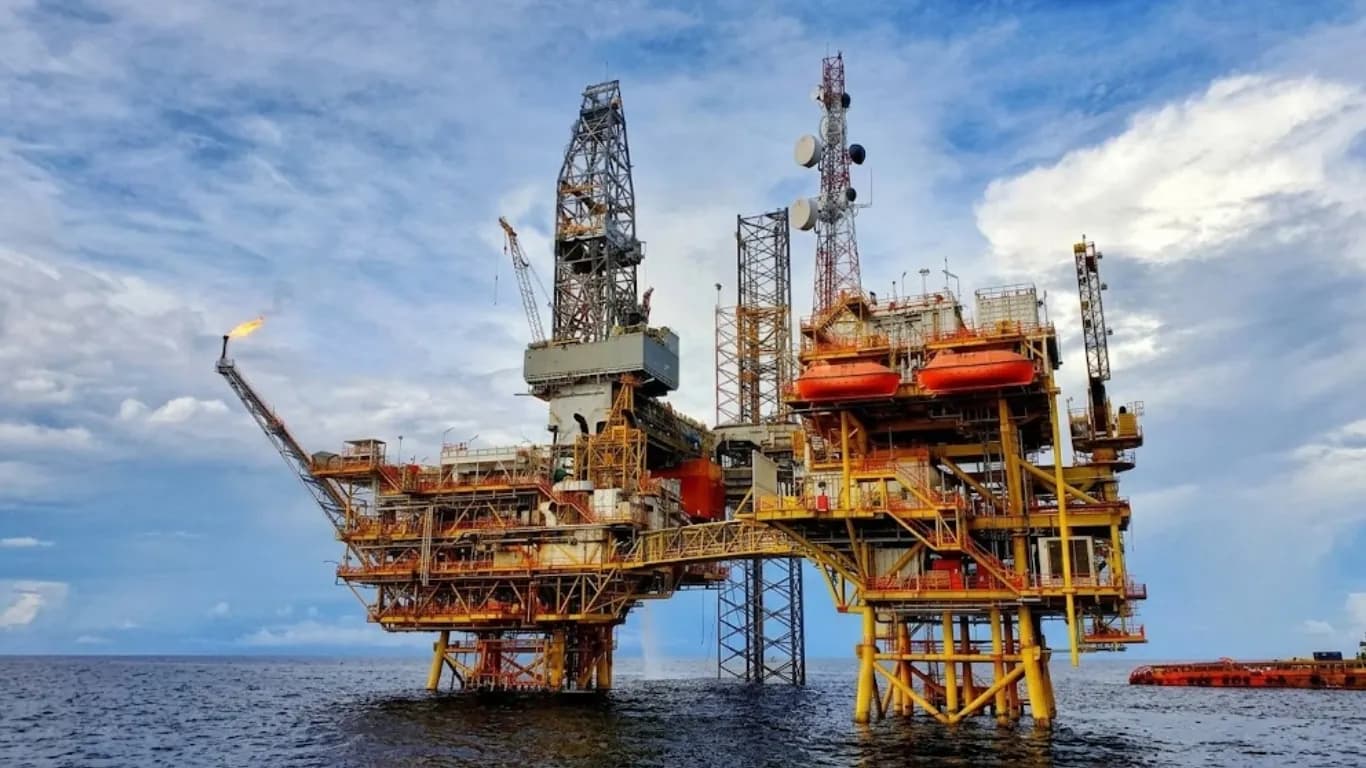
A jack-up rig is a mobile offshore drilling platform that can lower its legs to the seabed and jack its hull up above the waterline, creating a stable, wave-penetrating structure for drilling. When the drilling programme at a location is complete, the hull is lowered back into the water, the legs are raised, and the rig is towed to the next location by supply vessels.
The process of setting up a jack-up rig on location is called preloading , filling ballast tanks with seawater to force the spud cans on the leg bases to penetrate the seabed to their design depth, verifying that the seabed can support the rig's full elevated weight before drilling begins. It is one of the most technically demanding phases of jack-up operations.
The cantilever feature , the "IC" in BMC-300-IC , allows the drilling package (derrick, top drive, rotary table, and drill floor) to be slid outboard beyond the hull edge on a telescoping structure called the cantilever. This allows the rig to drill wells that are offset from the rig's footprint , essential for platform well operations where the rig must position over existing jacket structures without placing its legs in conflict with subsea infrastructure.
The Mumbai High Context
Sagar Kiran's primary operational context is Mumbai High , the oilfield it was built to support.
Mumbai High is not a single structure. It is a complex of two main blocks , Mumbai High North (MHN) and Mumbai High South (MHS) , divided by a shale barrier that allows independent reservoir management. The field was discovered in 1974 and commenced production in 1976. At peak in the mid-1980s, it was producing over 400,000 barrels per day, making it one of Asia's most productive offshore oilfields.
As with all mature oilfields, Mumbai High required continuous redevelopment to sustain production. Each redevelopment phase meant new wells , infill drilling, sidetracks, and horizontal wells designed to access pockets of remaining reserves. Each new well required a rig. Sagar Kiran was one of the workhorses of this programme.
ONGC's board approved the second phase of MHN redevelopment in January 2009, the third phase in June 2014, and phase four in February 2019 , a continuous reinvestment cycle that keeps requiring rig time. Sagar Kiran participated across multiple phases of this effort.
The Monsoon Mobilisation - An Annual Test of the Rig
One of the most revealing tests of a jack-up rig's operational reliability is whether it can be jacked down and towed safely before the southwest monsoon arrives on India's western coast , typically in late May to early June.
The Arabian Sea during the southwest monsoon generates sustained wave heights of 3–7 metres with peak heights exceeding 10 metres during severe weather events. A jack-up rig in the elevated position during monsoon conditions faces extreme loads on its legs and hull. The accepted practice is to move rigs to sheltered anchorages or to continue drilling only at sites with verified environmental limits within the rig's storm survival envelope.
By 2023, ONGC was coordinating the movement of 36 offshore rigs ahead of the monsoon season , described by industry observers as "a logistical ballet of precision and discipline." Sagar Kiran participates in this annual mobilisation. A rig that cannot jack reliably is a rig that cannot be moved safely before monsoon. The jacking system is not just a drilling tool in Indian waters , it is a survival system.
June 28, 2022 - The Day Sagar Kiran Was the Rescue Rig
At 11:45 on Tuesday 28 June 2022, a Pawan Hans Sikorsky S-76D helicopter carrying seven passengers and two pilots was on approach to land at Sagar Kiran, approximately 60 nautical miles west of Mumbai in the Mumbai High area.
Approximately 1.5 kilometres from the rig's landing zone, the helicopter ditched into the Arabian Sea.
The rescue operation that followed was immediate. A boat from Sagar Kiran was deployed within minutes. The Indian Navy dispatched a Sea King helicopter and an Advanced Light Helicopter. Offshore supply vessels , including OSV Malviya-16, OSV Greatship Asmi, OSV ABS Anokhi, and OSV Subhaprada , were diverted to the scene. The Indian Coast Guard launched a Dornier fixed-wing aircraft.
All nine people were pulled from the sea. Four of those recovered unconscious were airlifted by Navy helicopter to Nanavati hospital in Mumbai, where they were declared dead , including three ONGC employees and one contractor worker. Five survived.
The petroleum minister at the time described the rescue team deployed from Sagar Kiran as showing "extraordinary valour." ONGC announced a cash award of ₹50,000 to every member of the rig crew for their role in the rescue operation.
The incident is documented here not for dramatic effect, but because it illustrates what offshore rigs are in practice. They are not just drilling machines. They are offshore communities. They are points of rescue and support in a hostile environment. The crew of Sagar Kiran that morning demonstrated why the human element of offshore operations cannot be reduced to a specification sheet.
The Six Owned Jack-Ups - India's Indigenous Drilling Core
Sagar Kiran is one of six ONGC-owned jack-up rigs that form the indigenous core of India's offshore drilling fleet. The six - all Baker Marine BMC-300 design, all built at Mazagon Dock , represent India's most capital-efficient offshore drilling assets. Owned rigs do not pay international day rates in foreign currency. Their operational costs are in rupees. Their maintenance is controlled by the owner. Their crews are ONGC employees with institutional continuity.
Two rigs from the early Sagar fleet , Sagar Pragati and Sagar Lakshmi , have since been discontinued. The remaining six continue to operate.
Recommended by LinkedIn
Sagar Vijay (1985) and Sagar Bhushan (1987) - self-propelled drillships - completed the deeper-water component of ONGC's owned fleet.
The Chartered Fleet Alongside
In addition to its owned rigs, ONGC has operated chartered jack-ups from international operators at Mumbai High and other fields. Rigs such as Trident XII (1982-built, BMC-300-IC), the Parameswara (1983-built, BMC-300-IC), and units from Shelf Drilling and others have worked alongside the Sagar fleet on multi-year contracts.
Interestingly, many of the chartered rigs are also BMC-300-IC design , the same design as Sagar Kiran. This is not coincidental. The BMC-300-IC proved itself as the right specification for Mumbai High's water depths, and ONGC has consistently preferred this design family whether buying or chartering. Day rates for similar rigs at Mumbai High have been estimated at approximately $30,000–$40,000 per day in recent contracting rounds.
The Cochin Shipyard - India's Newest and Largest Drydock
On 17 January 2024, Prime Minister Narendra Modi inaugurated two landmark infrastructure projects at Cochin Shipyard Limited in Kochi, Kerala:
1. A new 310-metre drydock , the largest in India , with the following specifications:
- Length: 310 metres (stepped design with intermediate gate)
- Width: 75 metres (wider section) / 60 metres (narrower section)
- Depth: 13 metres
- Designed life: 100 years
- Combined cost (drydock + ISRF): ₹2,769 crore
- Drainage: Three main pumps at 23,000 m³/hr , empty in 3.5 hours
- Capable of servicing LNG vessels, aircraft carriers, jack-up rigs, and other large vessels
- Designer: Royal Haskoning DHV Consulting (UK and Indian offices)
- Constructor: Larsen & Toubro
2. The International Ship Repair Facility (ISRF) - India's first fully developed pure ship repair ecosystem, with a 6,000-tonne ship lift and transfer system, six simultaneous workstations, and capacity to handle 84 ships per year.
Sagar Kiran is the first jack-up rig to enter this new drydock. That is not incidental. It is a deliberate choice to prove a new national capability with a strategically important domestic asset.
The MODU 89 Standard - What It Requires
The refit is upgrading Sagar Kiran to meet the IMO's 1989 MODU Code , formally the "Code for the Construction and Equipment of Mobile Offshore Drilling Units, 1989" (Resolution A.649(16)).
The MODU Code is the offshore equivalent of SOLAS (the International Convention for the Safety of Life at Sea) for mobile drilling units. It provides comprehensive design criteria, construction standards, and safety measures covering:
- Structural integrity and materials : hull construction, leg strength, spud can design
- Subdivision and stability : compartmentalization, flooding scenarios, inclination limits
- Machinery installations : propulsion (where applicable), power generation, essential services
- Electrical installations : hazardous area classification, explosion protection, emergency power
- Fire safety : structural fire protection, fixed suppression systems, fire detection and alarm
- Life-saving appliances : lifeboats, life rafts, rescue boats, immersion suits, EPIRBs
- Radio communications : GMDSS equipment and procedures
- Jacking systems : for jack-up rigs specifically: structural and operational standards for leg jacking
- Helidecks : structural loads, marking, firefighting provisions, lighting
Sagar Kiran was built in 1988 , the year before the 1989 MODU Code was adopted. It was therefore built to the earlier 1979 MODU Code standards. Upgrading to MODU 89 means bringing the rig to a higher safety baseline across multiple systems simultaneously , not just a paper certification, but physical modifications, equipment replacements, and third-party verification.
The Scope of the Refit - What Is Being Done
The scope disclosed publicly by ONGC and Cochin Shipyard covers:
STRUCTURAL
- Steel renewals : replacement of corroded or fatigued structural members throughout the hull and leg structures
- Pipe replacements : renewal of marine piping systems (seawater, ballast, fire main, utility lines)
- Hull inspection and repair : underwater inspection, coating renewal, thickness measurements, weld inspection
DRILLING AND OPERATIONAL SYSTEMS
- Overhauls of key drilling equipment , drawworks, rotary table, top drive systems, BOP stack components, mud system
- Jacking system inspection and refurbishment , the pinion drive units, gear trains, and structural connections that raise and lower the hull
ACCOMMODATION AND SAFETY
- Accommodation upgrades : modernizing crew quarters, galley, recreation, and sanitation facilities to current standards
- Safety systems : fire detection, suppression, and life-saving equipment to MODU 89 requirements
- Electrical and instrumentation systems : hazardous area equipment review, panel upgrades, automation and control modernization
The Cost of Replacement
A new-build jack-up rig of equivalent specification to Sagar Kiran costs, at 2024 market rates, approximately $200–250 million. Lead time from order to delivery at a capable shipyard is typically 24–36 months.
A comprehensive refit including MODU 89 upgrade, steel renewal, equipment overhaul, and accommodation modernization on an existing rig typically costs 15–25% of new-build price , depending on the extent of work required. For a rig like Sagar Kiran, the refit extends operational life by 10–15 years minimum at a fraction of replacement cost.
The Value of Operational Track Record
Sagar Kiran has been operating in Indian waters since 1988. The ONGC teams that manage it know its behaviour in the specific geological and environmental conditions of the Mumbai High area. They know its leg penetration characteristics in the western shelf seabed. They know its drilling performance parameters in the formation types at Mumbai High and adjacent fields.
This institutional knowledge has genuine economic value. Introducing a new rig always involves a learning curve , unfamiliar systems, different operational procedures, a period of sub-optimal performance while the team and the machine develop their working relationship.
A refitted Sagar Kiran brings upgraded systems and extended life while retaining the operational familiarity that decades of service have built.
The Strategic Independence Argument
Every owned rig that ONGC operates is a rig it does not need to charter. At current day rates of $30,000–$40,000 per day for a shallow-water jack-up, a single owned rig at 90% utilization saves ONGC approximately $10–13 million per year compared to chartering an equivalent unit.
Over the 10–15 year extended life that the refit enables, that saving totals $100–195 million , in addition to avoiding the capital cost of replacement.
The refit is not just maintenance. It is an investment with a quantifiable return.
The Domestic Rig-Building Dream - Active Again
The Sagar fleet in the 1980s was India's most ambitious indigenous offshore engineering programme. It went dormant in the 1990s as ONGC shifted to chartering. It is now coming back.
In November 2024, Cochin Shipyard signed an MOU with Seatrium LeTourneau USA (SLET) for design and critical equipment for jack-up rigs for the Indian market. CSL is in advanced discussions with ONGC for a potential $550 million order to construct two new offshore jack-up rigs domestically.
The Sagar Kiran refit is the proof of concept. India can maintain, modernise, and extend the life of offshore drilling assets at home. That demonstration is the foundation for what comes next.
The Market Sagar Kiran Returns Into
When Sagar Kiran completes its refit and returns to the Arabian Sea , likely late 2026 , it returns into India's most accelerated offshore investment cycle in decades:
- Up to 10 jack-up rigs projected operating offshore India between 2025 and 2027 (Westwood Global Energy / RigLogix)
- India targeting 1 million barrels per day domestic crude production by 2030
- Samudra Manthan : $18–20 billion deepwater programme targeting KG Basin, Mahanadi, Andaman, Saurashtra
- 45 well spuds annually projected for India's offshore programme
- Mumbai High Phase 4 redevelopment ongoing , continuous rig demand
Every well needs a rig. Every owned rig is a rig ONGC does not charter. A refitted, MODU 89-compliant Sagar Kiran contributes directly to that programme at a fraction of new-build cost.
Conclusion: Steel, Sea, and the Logic of Continuity
Sagar Kiran has been at sea for 37 years.
It was built before most of the engineers who operate it were born. It has survived monsoons. Drilled hundreds of wells. Participated in the continuous redevelopment of India's most important oilfield. Responded to a helicopter ditching with a rescue operation that saved five lives.
It has now been drydocked in India's largest shipyard facility, undergoing a life-extension programme that didn't exist two years ago, as the first offshore rig to prove a new national maritime infrastructure capability.
That is not maintenance. That is the story of how India manages its offshore engineering heritage , by extending it, improving it, and using it to prove what comes next.
The rig India built for itself is being rebuilt. When it returns to the Arabian Sea, it will drill for at least another decade , in the same waters it has worked since 1988.
Sagar Kiran survived changing oil prices, multiple redevelopment cycles, new technologies, and nearly four decades of offshore operations.
The question is:
How many of today's industrial assets will still be considered worth rebuilding 38 years from now?
Happy Reading!