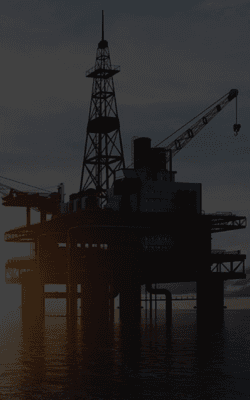
Every drilling rig, whether offshore or onshore, jack-up or land rig, looks different at first glance. Mast height changes. Layouts vary. Equipment brands differ.
But strip away the steel, paint, and vendor names, and every modern rotary drilling rig is built around the same five fundamental systems.
These systems have been taught for decades. Their names haven’t changed. What has changed, dramatically, is how they are engineered, controlled, monitored, and integrated.
Understanding these five systems is not just academic knowledge anymore. It’s the difference between a rig that merely operates and one that performs reliably under modern drilling demands.
1. The Power System: More Than Just “Keeping the Lights On”
At its most basic level, the power system exists to generate and distribute energy across the rig. Without it, nothing moves, no hoisting, no circulation, no well control.
Traditionally, this meant diesel or gas engines driving generators, feeding switchboards and transformers that supplied power to motors and auxiliaries. As long as voltage was present, the rig was considered “powered.”
That assumption no longer holds.
Modern drilling rigs are electrically dense environments. High-power VFDs, top drives, mud pumps, automation systems, PLCs, safety systems, and monitoring platforms all depend on stable, synchronized, high-quality power.
Today, the real challenge isn’t power availability, it’s:
- Load sharing across multiple generators
- Frequency and voltage stability under dynamic drilling loads
- Harmonic control affecting drives and control systems
- Power continuity for safety-critical logic
The power system is no longer a utility. It is the foundation upon which automation and safety depend.
Automation Layer: Power Intelligence & Control
Modern power systems are governed by:
- Power Management Systems (PMS)
- Generator load-sharing logic
- Automatic start/stop and sequencing
- Blackout prevention and recovery logic
- Harmonic mitigation strategies for VFD-heavy loads
Automation ensures generators don’t just run, they respond dynamically to drilling load changes without destabilizing downstream systems.
Safety Layer: Power Integrity & Protection
Safety in power systems is less about shutdowns and more about preventing cascading failures:
- Under/over voltage & frequency protection
- Reverse power and overload protection
- Segregation of safety-critical loads
- UPS-backed supply for PLCs, BOP control, and safety systems
Key risk today: Power quality deviations that don’t trip breakers but silently disrupt automation and safety logic downstream.
2. The Hoisting System: Where Physics Meets Control Logic
The hoisting system is responsible for lifting and lowering the drill string, casing, and heavy tools , a task that has always been mechanically demanding and unforgiving.
Historically, hoisting relied on draw works, steel drilling lines, crown blocks, and traveling blocks, with the driller’s experience compensating for load variations and inertia.
That model has evolved.
Modern hoisting systems are no longer purely mechanical. They are electromechanical systems governed by control logic, using:
- High-power electric motors and drives
- Load cells and encoders
- Real-time feedback for hook load and speed
- Automated control modes for consistency
Why does this matter?
Because precise hoisting control directly reduces:
- Mechanical shock loading
- Fatigue on drilling lines and structures
- Risk during tripping and casing operations
- Dependence on manual judgment during critical lifts
In modern rigs, hoisting performance is defined less by steel and brakes , and more by how intelligently load is sensed, interpreted, and controlled.
Automation Layer: Load-Aware Motion Control
Hoisting automation now includes:
- Closed-loop control of speed and torque
- Real-time hook load measurement
- Automatic acceleration/deceleration profiles
- Anti-sway and shock-load mitigation logic
- Mode-based control (tripping, casing, drilling)
The system is no longer reacting to commands, it is actively managing physics.
Safety Layer: Limit Enforcement & Fault Prevention
Hoisting safety depends on:
- Upper/lower travel limits
- Overload and slack line detection
- Emergency stop logic with controlled braking
- Interlocks tied to rotary and circulation states
Key risk today: Logic that works perfectly in static tests but behaves unpredictably under dynamic load and speed changes.
3. The Rotary System: Torque Is Easy — Control Is Not
The rotary system applies torque to the drill string to cut through rock. For decades, this meant rotary tables, kellys, swivels, and brute mechanical force.
Today, most rigs rely on top drive systems, fundamentally changing how rotation is applied and controlled.
A modern rotary system integrates:
- Electric or hydraulic motors
- Torque and speed regulation
- Real-time feedback loops
- Protection logic for downhole stability
This evolution matters because drilling is no longer about maximum torque, it’s about controlled torque.
Poor torque management leads to:
- Reduced rate of penetration
- Premature bit wear
- Stick-slip and torsional vibration
- Downhole tool damage
Modern rotary systems are not just turning the string, they are continuously balancing torque, speed, and feedback to maintain drilling efficiency and wellbore stability.
Automation Layer: Torque & Speed Intelligence
Modern rotary automation focuses on:
- Torque limiting and ramp control
- Speed regulation under varying downhole resistance
- Stick-slip mitigation logic
- Integration with drilling parameters and WOB
- Drive health and performance monitoring
Automation doesn’t just apply rotation, it optimizes drilling behavior in real time.
Safety Layer: Downhole & Mechanical Protection
Safety functions include:
- Torque and RPM limits
- Drive overcurrent protection
- Stall and abnormal vibration detection
- Interlocks with hoisting and circulation systems
Key risk today: Rotary systems operating “within limits” while slowly damaging downhole tools due to poorly tuned control loops.
Recommended by LinkedIn
4. The Circulation System: Where the Well Speaks First
The circulation system manages drilling mud , pumping it downhole to cool the bit, carry cuttings to surface, and control formation pressure.
Traditionally, this involved mud pumps, tanks, shale shakers, and manual observation. Problems were often detected late , after symptoms became visible.
That approach is no longer acceptable.
Modern circulation systems are instrumented and monitored in real time, tracking:
- Standpipe pressure
- Flow rate
- Mud density and properties
- Gas detection and returns
Why is this critical?
Because the earliest signs of well problems, kicks, losses, stuck pipe, almost always appear first in circulation data.
Early detection allows intervention before conditions escalate. In modern rigs, circulation is not just fluid movement, it is a diagnostic system for well health.
Automation Layer: Real-Time Well Diagnostics
Circulation automation now integrates:
- Pressure and flow trend analysis
- Pump sequencing and speed control
- Automated alarm thresholds based on operating modes
- Data feeds into drilling and well control systems
The circulation system has become the earliest warning layer for well integrity.
Safety Layer: Kick & Loss Detection Support
While not a primary safety barrier, circulation safety supports:
- Abnormal pressure detection
- Flow imbalance alarms
- Gas-in-mud monitoring
- Early indicators feeding well control logic
Key risk today: Data is available, but alarms are poorly contextualized, leading to late or ignored warnings.
5. The Well Control System: Automation Has Replaced Reaction
The well control system exists for one reason: to prevent uncontrolled release of formation fluids.
At the center of this system is the Blowout Preventer (BOP), supported by hydraulic accumulators, control pods, panels, valves, and rams.
In the past, well control depended heavily on:
- Manual decision-making
- Human reaction time
- Procedural discipline under stress
Modern rigs no longer rely on hope and reaction.
Well control systems today are:
- Automated
- Continuously monitored
- Regularly tested through logic verification
- Designed to respond instantly under extreme pressure
The emphasis has shifted from operator response to system reliability and logic integrity.
When well control is needed, there is no margin for delay, misinterpretation, or partial function.
Automation Layer: Deterministic Response Logic
Modern well control automation includes:
- Automated BOP actuation logic
- Sequence control for valves and rams
- Condition-based permissive
- Continuous system health monitoring
- Test and verification routines
The system is designed to act, not wait.
Safety Layer: Absolute Reliability Under Stress
This layer is non-negotiable:
- Redundant control paths
- Accumulator pressure monitoring
- Fail-safe valve positioning
- Continuous integrity checks of control logic
- Independence from non-essential systems
Key risk today: Interfaces with power and control systems that are not validated during abnormal or degraded conditions.
What Has Really Changed — Even Though the Names Haven’t
The five systems, Power, Hoisting, Rotary, Circulation, and Well Control , are the same ones taught decades ago.
What has changed is everything beneath the surface:
- Electrification replacing mechanical dependency
- Automation replacing manual intervention
- Instrumentation turning systems into data sources
- Integration linking system behavior in real time
Modern rig performance no longer depends on individual machines working well in isolation. It depends on how these five systems interact under load, under stress, and under changing conditions.
Final Thought
A drilling rig is not five separate systems operating independently.
It is a system-of-systems, where power quality affects control logic, control logic affects hoisting behavior, hoisting affects wellbore conditions, and circulation data feeds well control decisions.
Understanding the fundamentals is still essential.
But in modern drilling, mastery lies in how these systems are controlled, monitored, integrated, and upgraded , not merely in knowing their names.
A modern drilling rig is no longer a mechanical asset with automation added on top.
It is a fully automated system-of-systems, where safety is achieved through:
- Predictable power behavior
- Correctly tuned control logic
- Context-aware alarms
- Verified system interaction under load
The rigs that perform best in the next decade won’t be the ones with the newest equipment, They’ll be the ones where automation and safety layers are engineered to work together, not just coexist.
Happy Reading!
REFERENCES :
- Oil Rig Systems : By: Craig Freudenrich, Ph.D. & Jonathan Strickland
- Rigskills.com
- Oil & Gas Portal
- Rig Components Video