Restoring Ignition Confidence on an Aging Offshore Asset.
In offshore and process operations, flare systems are rarely discussed during normal conditions.
As long as the flare ignites, the assumption is simple:
The system is working.
But in reality, flare ignition reliability rarely deteriorates overnight.
It declines quietly. A delayed spark. An occasional failed ignition attempt. An intermittent flame failure alarm that clears after reset.
Minor disruptions that are often dismissed as temporary maintenance concerns.
Until the day ignition reliability becomes unpredictable.
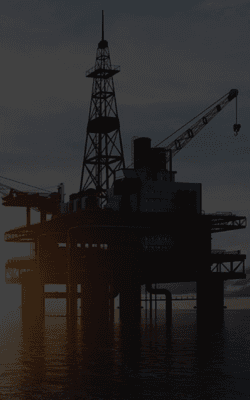
That was the challenge faced on an aging offshore installation operating with a flare boom pilot ignition system that had gradually become less dependable after years of continuous exposure to harsh marine conditions.
The flare system remained operational.
But operators had started noticing warning signs that suggested something deeper was changing.
Early Symptoms Observed Offshore
The issues were subtle at first.
Yet operational teams began reporting recurring concerns:
- Delayed pilot ignition response
- Multiple ignition attempts before flame stabilization
- Intermittent flame failure indications
- Increasing maintenance intervention frequency
- Concerns around ignition reliability during emergency depressurization scenarios
The concern was no longer maintenance alone.
The bigger operational question became:
Would the flare ignite reliably when the process actually demanded it?
Because during startups, shutdowns, emergency relief, or upset process conditions, ignition certainty becomes a process safety requirement — not simply an equipment function.
And in flare systems:
Reliability matters most during abnormal conditions, not normal operations.
A detailed technical assessment revealed that the flare system itself had not failed. The challenge was more gradual.
Ignition reliability had started declining due to cumulative environmental and lifecycle degradation.
1. Environmental Exposure Was Accelerating Deterioration
Years of offshore operation had exposed the ignition system to continuous environmental stress, including:
- Salt-laden marine atmosphere
- Moisture ingress risk
- UV degradation
- High ambient temperatures
- Corrosion around ignition-related assemblies
While individually manageable, these conditions had collectively begun affecting long-term system dependability.
This is a common offshore reality:
Equipment often continues functioning long after reliability has already started declining.
2. Aging Ignition Architecture Was Losing Consistency
Further inspection identified early signs of lifecycle fatigue within the ignition setup.
Technical observations included:
- Weakening spark generation consistency
- Cable insulation degradation due to prolonged heat exposure
- Reduced ignition confidence during repeated operating cycles
- Concerns around ignition performance under harsh environmental demand
Of particular concern was the integrity of ignition cables operating in elevated temperature zones near the flare boom.
In flare systems, spark energy consistency matters.
Because the issue is not simply whether ignition happens —
It is whether ignition happens immediately and repeatedly under demanding conditions.
3. Reliability Under Critical Conditions Was Becoming Uncertain
Although the flare remained operational during routine operations, technical concerns became more visible during abnormal demand scenarios.
Questions emerged around:
- Reliable pilot ignition during high-wind offshore conditions
- Flame stability verification
- Delayed ignition response during emergency process demand
This distinction matters.
Because offshore systems cannot depend on equipment that “usually works.”
They require systems that work predictably — every time.
In high-risk environments, repeatability becomes reliability.
In many offshore assets, flare ignition reliability begins declining long before complete failure occurs.
The challenge is that these warning signs are often overlooked because operations continue.
Multiple Ignition Attempts Before Flame Stabilization
A pilot burner that once ignited immediately may gradually begin requiring repeated ignition cycles.
Often dismissed as temporary, this may indicate:
- Weak spark generation
- Ignition transformer degradation
- Carbon build-up around ignition points
- Pilot burner wear
- Reduced ignition energy transfer
Repeated ignition attempts are not a nuisance.
They are an early reliability signal.
Intermittent Flame Failure Alarms
Flame loss indications that clear after re-ignition are frequently ignored because the flare eventually stabilizes.
However, intermittent flame instability may suggest:
- Flame monitoring degradation
- Sensor performance issues
- Weak pilot flame holding
- Environmental disruption affecting flame stability
The concern is not only flame loss.
It is declining confidence in flare readiness.
Recommended by LinkedIn
Cable Degradation in High-Temperature Areas
Ignition cable integrity is one of the most overlooked contributors to declining flare performance.
Under prolonged exposure to:
- Heat
- Vibration
- Offshore weather conditions
Cable insulation performance can gradually weaken.
The result may include:
- Inconsistent spark performance
- Delayed ignition response
- Increased maintenance frequency
This is why steel-braided, high-temperature ignition cables become essential in harsh flare boom environments.
Corrosion Around Critical Components
Marine conditions quietly accelerate deterioration.
Corrosion affecting:
- Pilot burner assemblies
- Junction boxes
- Cable terminations
- Mechanical support structures
can directly impact ignition reliability over time.
This is where material selection becomes critical.
In offshore applications, SS316 construction is often preferred for improved corrosion resistance and long-term durability.
Delayed Ignition During Critical Demand
Perhaps the most overlooked warning sign:
The flare still ignites — just slower than before.
This is where operators become vulnerable.
Because during emergency depressurization or upset conditions, delayed ignition is not merely an inconvenience.
It becomes an operational and HSE concern.
In critical moments:
The question is not whether the flare can ignite. The question is whether it can ignite immediately and reliably.
Engineering Intervention: Improving Reliability Without Major Disruption
The requirement was not simply replacing failed components.
The objective was broader:
Improve ignition confidence, maintainability, and lifecycle reliability without major disruption to the existing flare setup.
SMEC supported the intervention through a flare boom pilot ignition system retrofit approach, focused on strengthening ignition dependability under offshore operating conditions.
Scope Included
- Technical review of the existing flare ignition arrangement
- Replacement and upgrade of critical ignition-related components
- Integration of a high-energy ignition system (12 Joules) to improve spark reliability
- >5 sparks per second capability for faster and more dependable pilot ignition
- Offshore-grade SS316 corrosion-resistant execution
- Steel-braided high-temperature ignition cables designed for harsh operating environments
- Support for flame monitoring integration to strengthen ignition verification
- Consideration for hazardous area / explosion-proof suitability
- Retrofit compatibility with the existing flare boom configuration
The focus was simple:
Reduce ignition uncertainty before it becomes operational exposure.
Operational Outcome
Following the ignition reliability intervention, the operator experienced:
- Improved ignition consistency during flare demand conditions
- Reduced maintenance intervention around pilot reliability concerns
- Better confidence in flare readiness during emergency scenarios
- More predictable ignition performance under offshore operating conditions
But the most important outcome was operational:
The flare system shifted from a maintenance concern to a system operators could trust during critical process events.
Final Takeaway
Flare systems are rarely judged during stable operations.
They are judged during abnormal ones.
And by the time ignition reliability becomes visibly inconsistent, degradation has often been developing quietly for months.
The operators that manage flare reliability best are rarely the ones responding fastest.
They are the ones identifying performance decline before ignition certainty becomes operational uncertainty.
At
SMEC Automation
, our focus is not simply restoring ignition capability —
but restoring ignition confidence under the operating conditions that matter most.
Explore SMEC
SMEC – The Solution Hub is our cross-industry knowledge series covering Oil & Gas, Marine, and Industrial systems where engineering, automation, and operations intersect.
Our Ecosystem:
India :
- SMEC Automation
UAE :
- SMEC MARINE SOLUTIONS LLC
- SMEC NAVSOL
- SMEC Oil & Gas Solutions LLC
Training & EduTech
- SMEClabs
Our Digital Hubs:
- Corporate: www.smec.in
- Energy & Industrial: www.smecoilandgas.com
- R&D & Technology: https://smecrtd.com/
- Asset Intelligence: www.ProSet360.com
Join the Conversation:
- YouTube