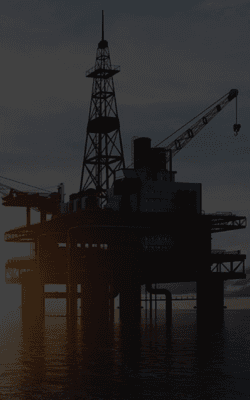
Jack-up rigs dominate shallow-water offshore drilling (≈400–500 ft) and account for ~60% of global offshore wells, driven by their mobility, structural stability, and cost efficiency compared to fixed platforms.
Despite their apparent simplicity, jack-ups are among the most structurally demanding and operationally unforgiving offshore assets, where seabed interaction, power stability, and system integration determine success or failure.
This article presents a well-researched, field-validated breakdown of how a jack-up rig operates, followed by a global snapshot of major active jack-up rigs and operators.
Rig Components – At a Glance
A modern jack-up rig consists of:
- Buoyant hull (floating during transit)
- 3 or 4 extendable legs (truss or tubular, up to ~500 ft)
- Spud cans (30–50 ft diameter footings)
- Hydraulic or electric jacking systems
- Cantilever or skid-off drilling package
Each component plays a structural role during different phases of the operation.
Step 1: Mobilization & Site Positioning
Jack-ups are mobilized in floating condition with legs fully raised.
Key actions:
- DGPS-based positioning over well slot
- Tugboat heading control (currents typically up to ~2 knots)
- Verification of bathymetry and geotechnical data
- Metocean window confirmation
Errors here propagate downstream as uneven leg penetration or punch-through risk.
Step 2: Leg Lowering & Spud Can Seabed Contact
Legs are lowered via the jacking system until spud cans contact the seabed.
Monitored parameters:
- Individual leg loads
- Hull tilt (maintained <1°)
- Initial penetration rate and symmetry
Penetration begins under the hull’s self-weight (~10,000–20,000 tonnes). ROVs may confirm seabed response in real time.
This is one of the highest-risk phases of jack-up operations.
Step 3: Preloading - Proving Seabed Integrity (Critical Phase)
Preloading validates seabed bearing capacity by applying loads exceeding operational conditions, typically using a 1.3–1.5× safety factor.
3-Leg Jack-Ups
- Hull ballast tanks flooded with seawater
- Load held until settlement stabilizes (hours to days)
4-Leg Jack-Ups
- Diagonal leg loading applied sequentially using hull weight
Acceptance criteria:
- No uncontrolled punch-through
- Settlement typically limited to <1–2 ft
- Temporary air gap during test: ~3–6 ft
Failure at this stage mandates relocation or redesign.
Step 4: Jacking to Operating Air Gap
Following successful preload:
- Ballast is removed
- Hull is elevated to the final operating air gap (≈60–100 ft)
Controls include:
- Rack Phase Differential (RPD) within design limits
- Redundant brakes and leg-locking systems
- Inclining tests to verify stability
The air gap prevents wave impact and long-term fatigue damage.
Step 5: Structural Fixation & Continuous Monitoring
Once elevated:
- Hull position is fixed
- Leg loads are redistributed
- Structural health monitoring begins
Sensors track:
- Leg bending moments
- Hull deflection
- Environmental load variations
Step 6: Power Generation & Electrical Distribution
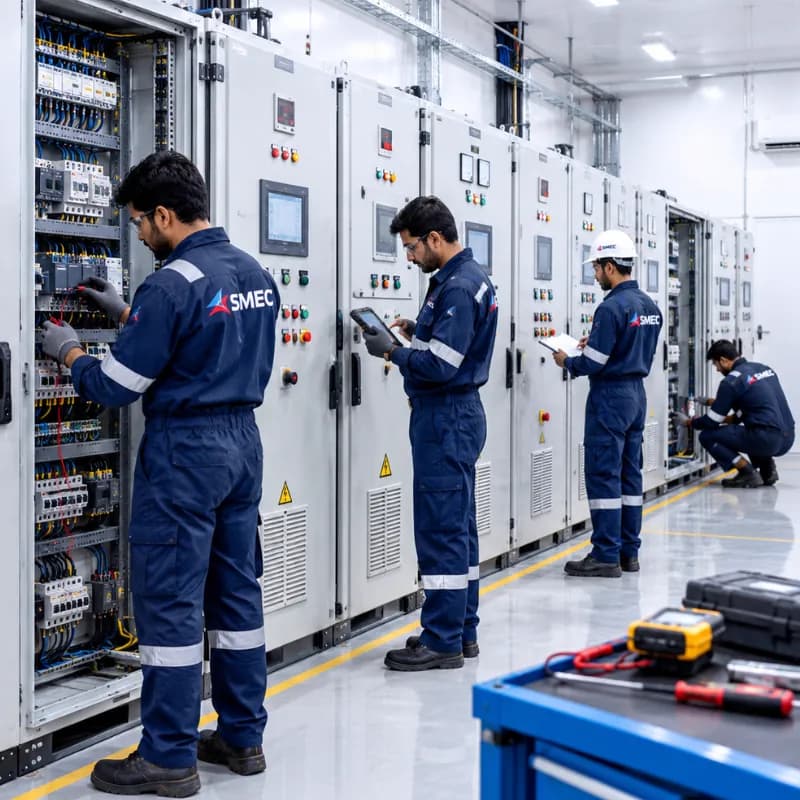
Jack-up rigs are electrically dense offshore assets.
Typical systems:
- Diesel generator sets
- Main & emergency switchboards
- Transformers, MCCs, VFDs
- Power Management System (PMS)
Power instability directly affects:
- Drilling continuity
- Automation logic
- Safety system availability
Recommended by LinkedIn
Step 7: Drilling & Hoisting Systems
Core systems include:
- Drawworks (hoisting)
- Top drive or rotary table
- Drill string & BHA
- Weight-on-bit and torque control
Automation protects against:
- Shock loading
- Overload
- Equipment damage during transients
Step 8: Mud Circulation & Solids Control
The mud system maintains well pressure and hole integrity.
Components:
- Mud pumps
- Shale shakers
- Desanders / desilters
- Degassers
Flow rate, pressure, and pit volumes are continuously monitored.
Step 9: Well Control Systems (BOP)
The most safety-critical system on the rig.
Includes:
- BOP stack
- Choke & kill manifolds
- Accumulator units
- Hydraulic control panels
Failures here are catastrophic, not operational.
Step 10: Automation, Control & Safety Layers
Modern jack-ups rely on:
- PLC-based control systems
- HMI stations
- Interlocks & permissive
- Alarm management
- Fire & Gas detection
- Emergency Shutdown (ESD)
These systems are designed to remain functional even during power disturbances.
Step 11: Production-Ready Status & Demobilization
A jack-up rig is considered production ready only when:
- Structural integrity is confirmed
- Power systems are stable
- Drilling, mud, and well control systems are validated
- Safety systems are fully operational
Typical setup time: 2–7 days, enabling rapid deployment versus fixed platforms.
Major Jack-Up Rig Operators & Active Fleets (Global Snapshot)
Shelf Drilling
- High Island Series
- Trident Series
- CJ-46 class Regions: Middle East, India, West Africa, SE Asia
Reference : Shelf Drilling rig fleet & individual rig details
ADES Group
- Admarine series
- Adyard-built units
- Legacy Keppel FELS rigs Regions: Saudi Arabia, UAE, Egypt, India
Borr Drilling
- Arabia I & II
- Gerd, Groa, Grid
- Norve, Thor Regions: Middle East, North Sea, Asia
Reference : Borr Drilling’s jack-up fleet & rigs
Valaris
- Valaris 116, 247, 248
- KFELS-B class Regions: Middle East, GoM, Asia
Reference : Valaris overview including jack-up rigs
Nabors Offshore
- Nabors 51 / 52 / 53 Regions: Middle East, Asia
ONGC (India)
- Sagar Vijay
- Sagar Bhushan
- Sagar Kiran Region: Indian offshore fields
COSL
- COSL Pioneer series
- COSL Promoter Regions: Middle East, Asia, Africa
Final Insight
Jack-up rigs succeed not because of drilling equipment alone, but because of system-level coordination:
- Seabed interaction
- Structural loading
- Power stability
- Automation integrity
- Real-time visibility during transitions
Most failures occur during change states, not steady drilling.
Understanding, and monitoring, these interactions is the difference between efficient offshore execution and unplanned downtime
Happy Reading!