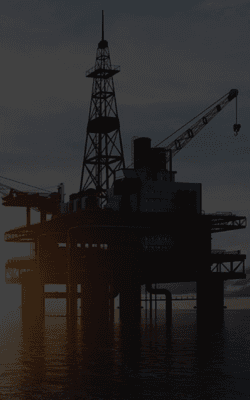
From ADNOC's connected drilling operations to Aramco's industrial AI deployments, the Gulf is showing what happens when digital intelligence moves from pilots into the physical asset.
Oil and gas has been digital for decades. PLCs automate equipment, DCS platforms control processes, SCADA connects geographically dispersed operations, historians store process data, condition-monitoring systems watch machinery, CCTV observes facilities and maintenance systems preserve years of asset history.
So the important question in 2026 is not whether oil and gas is becoming digital. It is what happens when these previously separate systems begin contributing to the same understanding of a physical operation.
That transition is becoming increasingly visible across the Middle East.
$72 Billion Is the Market. The Bigger Story Is Where the Intelligence Is Going.
According to Mordor Intelligence, the global oil and gas digital-transformation market is estimated at $72.18 billion in 2026, with projected growth to $124.89 billion by 2031 at an 11.59% CAGR. This is a global market-size estimate covering technologies and services across the value chain; it should not be interpreted as $72 billion of Middle East investment in 2026.
The regional investment backdrop is nevertheless substantial. Rystad Energy reports that Middle Eastern NOCs deployed more than $100 billion of upstream capital in 2025, while overall regional investment is expected to increase by roughly 10% to around $110 billion in 2026. Rystad also identifies AI moving from pilots towards industrial-scale deployment in predictive maintenance, drilling, production optimisation and emissions management.
Globally, Rystad estimates that digitalisation and AI could create nearly $500 billion of cumulative value for E&P companies between 2026 and 2030, principally through lower operating costs and production gains from improved uptime and recovery.
This makes the current digital cycle different from an ordinary IT investment cycle. Digital technology is moving closer to the economics and operation of the asset itself.
ADNOC: When 120+ Rigs Become a Connected Operating Environment
In August 2026, ADNOC and SLB announced the deployment of an AI-enabled Real-Time Operations Center across more than 120 onshore and offshore drilling rigs.
ADNOC says the platform consolidates live drilling data and AI-derived insights, can reduce engineering effort by 30–40%, enable engineers to oversee two to three times more rigs, reduce some analytical work from a day to minutes, and help identify issues early enough to potentially avoid one to two days of rig downtime.
The significance is not simply that ADNOC is applying AI to drilling. AI-assisted drilling has existed for years. What matters is scale and operational position: intelligence is being inserted closer to the point where drilling decisions are actually made.
ADNOC is applying the same logic elsewhere. Its Centralized Predictive Analytics and Diagnostics platform uses historical and real-time operational data to detect anomalies and diagnose equipment conditions. ADNOC reports that the system has contributed to a 50% reduction in unplanned shutdowns and a one-third reduction in planned upstream maintenance.
This is the progression from remote visibility towards remote operational intelligence.
Aramco: The Conversation Has Moved From AI Deployment to AI Value
Saudi Aramco provides another indication of where the market is heading. The company reported 442 identified AI use cases by late 2025, with more than 200 solutions deployed and over 100 under development. It attributed $1.8 billion in AI-driven Technology Realized Value to 2024.
By 2026, Aramco said AI had contributed more than $6 billion in realized business value across its operational network, including production efficiency, maintenance downtime reduction and faster infrastructure inspection. It has also trained more than 6,000 subject-matter experts to identify opportunities for AI deployment.
Perhaps the more revealing statistic is the underlying data estate. Aramco says it collects more than 10 billion data points every day from wells, pipelines, refineries, terminals and laboratories.
That illustrates an important distinction: industrial AI is not primarily a data-generation problem. It is a context problem.
The Oilfield Already Has Data. It Doesn't Always Have Context.
Consider one critical pump in a refinery or offshore installation. Its PLC knows whether a command was issued; the VFD knows current, frequency and faults; vibration and temperature sensors observe mechanical condition; process instrumentation sees pressure and flow; CCTV observes the physical environment; the maintenance system holds service history; and an experienced operator may recognise a behavioural change that none of those systems captures individually.
Every source can be correct while still providing only part of the explanation.
This is one of the fundamental challenges of industrial digitalisation. Industrial assets are often not data-poor; they are context-poor. The opportunity is therefore to connect enough operational information to move from What is this tag reading? towards What is happening to this asset, why is it changing, what is likely to happen next and does somebody need to act?
That is a much more consequential evolution than adding another dashboard.
CCTV Is Becoming an Industrial Data Source
The same transition is occurring in infrastructure that operators may already own.
Industrial CCTV has traditionally been a security system: cameras observe, record and provide evidence for later review. Computer vision allows the same visual environment to contribute machine-readable information about observable events and conditions.
ADNOC's Real-time AI Safety Event Detection programme has deployed more than 500 AI-enabled cameras, while its HSE Cockpit.ai integrates safety and operational information across more than 230 sites. ADNOC reports that HSE Cockpit.ai has contributed to a 30% reduction in safety incidents.
The important point is not the camera itself. The intelligence attached to the camera changes its operational role.
For brownfield facilities, that creates a different investment question. Instead of immediately asking how much new visual infrastructure is required, operators can first ask what additional intelligence can be extracted from the infrastructure already installed.
Remote Monitoring Is Moving Beyond Remote Watching
Remote monitoring is undergoing a similar change. Making information from an offshore platform, wellhead, pipeline or terminal available in another location remains valuable, but visibility alone is increasingly the baseline.
The next level is whether the system can distinguish normal from abnormal behaviour, correlate events, prioritise attention and provide enough operational context for a specialist to investigate without physically travelling to the asset.
For geographically distributed oil and gas operations, this changes the economics of expertise. A specialist no longer has to sit beside every asset if sufficient information and context can be brought to the specialist.
Remote operations therefore become less about moving the screen and more about moving the intelligence.
Predictive Maintenance Is Really About Buying Time
Predictive maintenance is often discussed as though the objective were to predict every equipment failure. A more useful objective is simpler: identify deterioration early enough to change the maintenance decision.
If vibration, temperature, motor current, process behaviour and maintenance history indicate that an asset is moving away from its normal operating condition, the operator gains time to investigate, mobilise resources, procure parts and schedule intervention.
The commercial value is not the prediction itself. It is the possibility of turning an unplanned event into a planned decision.
A Digital Twin Has to Do More Than Look Like the Asset
Digital twins face a similar test. A sophisticated 3D representation may improve visualisation, but operational value emerges when the representation is connected to engineering documentation, equipment hierarchy, live condition, maintenance history and operating behaviour.
Aramco, for example, has described AI-powered digital-twin applications that combine refinery sensor and process information with predictive analytics to support plant-performance optimisation.
The useful question is therefore not simply Do we have a digital twin? It is which engineering, maintenance or operational decision becomes better because the twin exists?
The Biggest Digital Opportunity May Be the Equipment Already Installed
This is particularly important in the Middle East because the region is simultaneously building major new energy infrastructure and operating an enormous brownfield estate.
Platforms, rigs, pipelines, terminals, refineries, compressors, pumps, motors, switchgear, PLCs and instrumentation can remain in service for decades. Replacing functioning infrastructure merely to create a cleaner digital architecture would often make little economic sense.
The more practical opportunity is brownfield intelligence:
- extracting useful information from existing PLCs and control systems;
- connecting legacy equipment without unnecessarily disrupting operations;
- adding condition sensing around critical machinery;
- applying intelligence to existing CCTV infrastructure;
- connecting maintenance history with actual asset condition;
- enabling remote diagnosis of distributed or offshore assets; and
- bringing previously isolated OT, IT and engineering information into useful operational context.
These may sound less dramatic than generative AI, but they determine whether Industrial AI can produce useful results in the physical world.
AI Sits Near the End of the Chain, Not the Beginning
The industrial intelligence architecture can be reduced to a relatively simple progression:
Physical Asset → Sense → Connect → Contextualise → Understand → Predict → Decide → Act
AI occupies the latter part of that chain. It cannot compensate indefinitely for everything missing before it.
If the measurement does not exist, AI cannot manufacture reliable sensor data. If information remains trapped inside a local system, intelligence cannot use it. If maintenance records are disconnected from equipment behaviour, context is lost. If five systems each hold part of the same event without communicating, adding another dashboard can simply create a sixth information island.
This is why the most important question for Industrial AI may not be “How sophisticated is the model?”
It may be “How much of the physical operation can the model actually understand?”
Where SMEC Fits Into This Transition
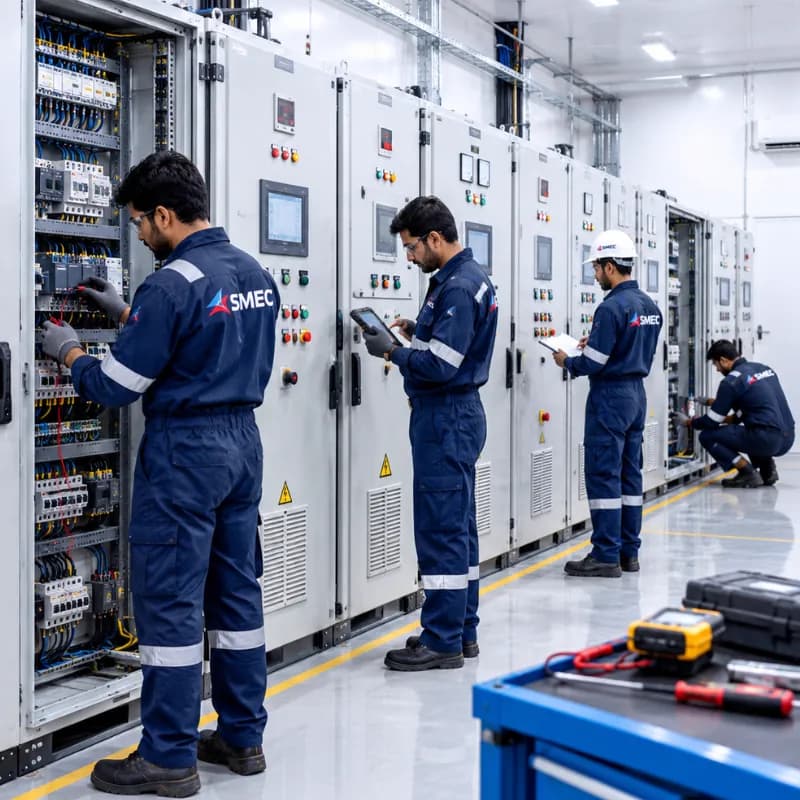
This is the problem space we are building around at SMEC: connecting physical industrial assets with the intelligence required to understand them better.
Our Asset Digital Intelligence ecosystem includes :
- NexView - AI-powered video intelligence, adding real-time analytical capability around CCTV infrastructure.
- NexWave - remote asset monitoring and operational visibility across distributed assets.
- NexVerse - digital-twin capabilities connecting the physical asset with its digital context.
- ProSet360 - maintenance, condition and asset intelligence supporting lifecycle decisions.
Around these sit SMEC's broader capabilities across industrial automation, IIoT, control systems, enterprise software and AI.
The starting point, however, should not be a product.
It should be the operating problem: an asset that cannot be adequately observed, a failure discovered too late, CCTV that records without recognising, maintenance decisions made without sufficient condition information, expertise that cannot economically sit beside every remote asset, or useful operational data trapped inside existing equipment.
Understand that problem first. Then engineer the digital architecture around it.
The Digital Oilfield May Eventually Disappear
Not as infrastructure, but as a separate concept.
Mature technologies eventually become inseparable from the systems they improve. We do not describe a modern refinery as an “electrically transformed refinery”; electrical engineering simply became part of the refinery. Automation followed much the same path.
Digital intelligence may eventually do the same. Remote monitoring becomes monitoring. Condition intelligence becomes maintenance. Computer vision becomes another sensing layer. Digital twins become part of engineering information architecture. AI sits behind operational decisions without every application needing an AI label.
That may be the deeper significance of what ADNOC, Aramco and the wider Middle East market are showing.
The industry is gradually reducing the distance between the physical asset, the information it produces, the engineer responsible for it and the decision that follows.
The estimated $72.18 billion global market in 2026 provides the headline. The more meaningful returns will appear elsewhere: failures identified earlier, downtime avoided, inspections improved, unnecessary journeys eliminated, expertise extended across more assets and maintenance interventions made because equipment condition requires them rather than simply because the calendar does.
That is where digitalisation stops being another technology programme.
It becomes part of how the asset operates.
And across Middle East oil and gas, that transition is already underway.
What could your existing asset infrastructure tell you if the right intelligence layer sat above it?
Before replacing cameras, control systems, sensors or existing assets, start by understanding what can already be connected, monitored, contextualised and made more intelligent.
Explore SMEC's Asset Digital Intelligence solutions , and talk to us about the operating problem you want to solve.
Explore SMEC's digital solutions and get an assessment of your existing infrastructure:
https://asset-digital-intelligence.smec.in/
Team | SMEC Oil & Gas Solutions LLC
📩 info@smecong.com | 📞 +971 50 249 1903
Start with the asset. Start with the problem. We’ll engineer the intelligence around it.