
Products
Pipeline SCADA & RTU Systems
Pipeline SCADA connects geographically distributed stations — RTUs, metering, valves and pump or compressor sites — to one supervisory environment of operator displays, alarms, trends and controlled remote commands. SMEC engineers that architecture around command authority, communications availability and alarm priority, with local control retained when a link is lost.
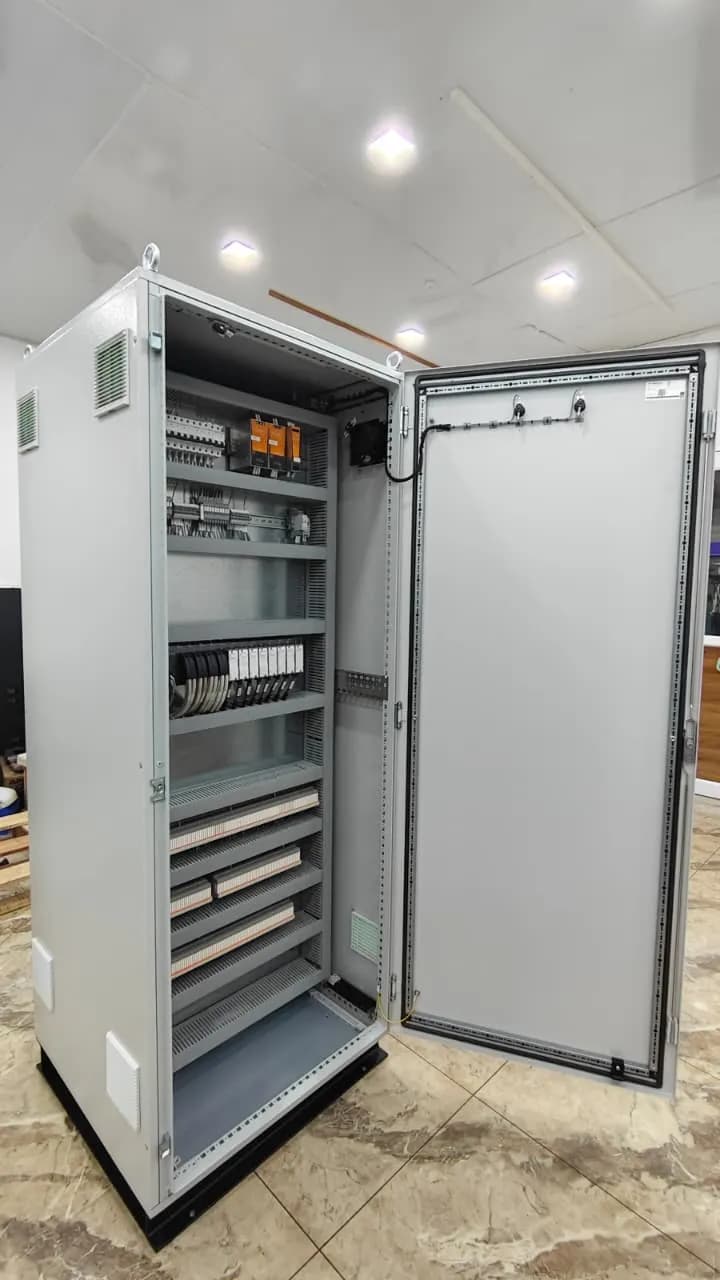
Pipeline Visibility from Remote Station to Control Room
Pipeline SCADA must connect dispersed stations without losing clarity about command authority, communications status or alarm priority. SMEC's engineering scope can bring RTUs, metering, valves, pump/compressor stations and supervisory systems into a coherent architecture.
How it works
Remote stations — RTUs collect pipeline pressure, flow, metering, valve and equipment data at geographically distributed stations.
Supervisory layer — SCADA provides operator displays, alarms, historical trends and controlled remote commands.
Communications — Latency, outages, redundancy, time synchronisation and store-and-forward requirements shape the telemetry design.
Cyber and safety — Remote-control authority, network segregation and fail-safe local operation are essential; leak detection is a separate engineered function.
Key components
RTU/PLC panels. An RTU acquires remote station measurements and status, timestamps events and exchanges authorised commands with SCADA while preserving local control on link loss.
Remote I/O. The remote i/o is selected for the equipment, operating duty and site conditions.
Telemetry gateways. The telemetry gateways is selected for the equipment, operating duty and site conditions.
Pump and compressor interfaces. The pump and compressor interfaces is selected for the equipment, operating duty and site conditions.
Valve stations. Valve actuation and position feedback must follow the approved process control and fail-safe philosophy, including loss-of-power behaviour.
Alarm/event logging. Alarm thresholds, priorities, delays and operator actions must be documented to avoid nuisance alarms and missed critical events.
Historian. The historian is selected for the equipment, operating duty and site conditions.
SCADA HMI. SCADA consolidates remote station measurements, alarms, trends and supervisory commands; local protective functions remain in field controls.
Redundant communication options. Protocols, command authority, network availability, loss-of-link response and cybersecurity boundaries must be agreed for every equipment interface.
Upgrades & retrofits
Migrate SCADA servers and historian while retaining compatible station RTUs.
Replace ageing field RTUs in phases and add communication redundancy.
Extend pump/compressor/valve station monitoring with secure control boundaries.
Retrofit scope depends on existing OEM interfaces, component condition, available space, shutdown windows and the approval basis of any safety-related functions.
Applications
- Crude pipelines
- Gas pipelines
- Terminals
- Gathering networks
Testing & documentation
Relevant IEC, ISO, API, classification-society, hazardous-area or functional-safety requirements must be selected according to the specific system and installation. Where applicable, the project package may include electrical drawings, GA layouts, datasheets, I/O schedules, cause-and-effect, communication lists, inspection records, FAT/SAT procedures, calibration records and as-built documents. No unverified compliance certification is claimed here.
Project evidence

Oil & Gas Facilities — Retrofit Solutions and Advanced Control Systems
Problem · SMEC scope · Architecture · Testing · Outcome
- Problem
- Ageing equipment and harsh, hazardous environments: an outdated MCC that had to be retrofitted live, multi-gas detection in Zone 1 areas, a BOP control system on ageing infrastructure, and a remote well site needing reliable telemetry with minimal on-ground supervision.
- SMEC scope
- SMEC retrofitted an MCC with LSIG-configured ACBs, digital motor protection relays and Form 4B panels in a phased retrofit with no downtime; delivered a Gas Watch Panel with SIL-2 sensors and 2oo3 voting; developed primary and secondary injection test kits for protection systems; designed, installed and commissioned a PLC-based BOP control system with ring-topology networking; and built a custom RTU panel for the well site.
- Architecture
- RTU panel in a Zone 1-certified IP66 flameproof enclosure, with redundant 24VDC UPS-backed power, Modbus RTU/TCP and DNP3, fail-safe DI/DO with watchdog timers, data buffering and timestamped event logging, and secure VPN remote access.
- Testing
- RTU panel FAT-tested by SMEC; Gas Watch Panel components verified before deployment.
- Outcome
- RTU panel: seamless SCADA integration across 40+ km of pipeline infrastructure, and on-site intervention reduced by 65%.
Common questions
Is SCADA a leak detection system?
No. SCADA provides data and controls; leak detection requires a separately defined detection methodology.
Can mixed-vendor RTUs be integrated?
Often, subject to protocols, licensing, data mapping and cybersecurity requirements.
What is required for an RFQ?
Station count, tag lists, telecoms details, existing RTUs, network diagram and control-room scope.
Have a Pipeline SCADA & RTU Systems project to discuss?
Share the existing equipment, drawings, project location and scope of work.
AE · Middle East & International
SMEC Oil & Gas Solutions LLC
Abu Dhabi, UAE
IN · India
SMEC Automation Pvt Ltd
Kochi, Kerala, India